




 Whitman Expo
-
1792 Die and Hub Trials and Splasher Values
Greysheet & Red Book® PRICE GUIDE
Sort by
Sponsor

Sponsor

Sponsor

Sponsor

Sponsor

Legal Disclaimer
The prices listed in our database are intended to be used as an indication only. Users are strongly encouraged to seek multiple sources of pricing before making a final determination of value. CDN Publishing is not responsible for typographical or database-related errors. Your use of this site indicates full acceptance of these terms.
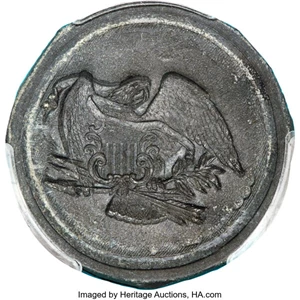
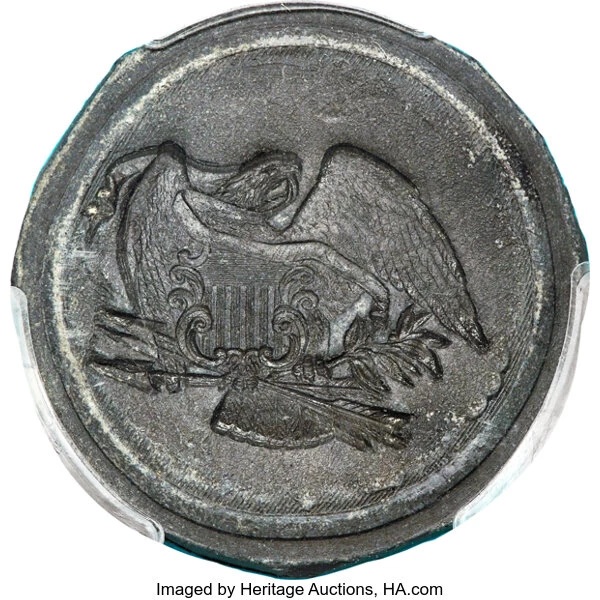
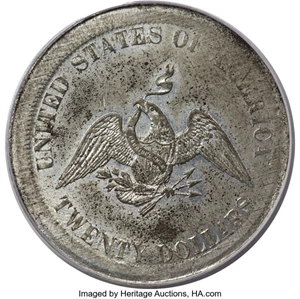
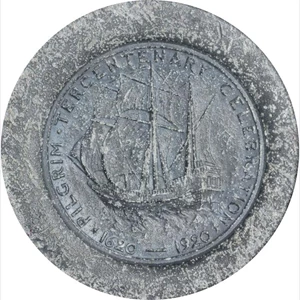
The Die and Hub Trials and Splashers series of Pattern Coinage in the U.S. Coins contains 5 distinct entries.
History and Overview
In the summer of 1792, silver coins with the inscription denominated as HALF DISME were struck in Philadelphia. The style of the 1792 silver half disme is related to that of the famous copper Birch cent of the same year signed BIRCH, giving reason to attribute the authorship of the half disme to Birch as well.
Although the 1792 silver half disme has been called a pattern and is designated as J-7, it is most assuredly a coin made for general circulation. This is confirmed by the significant wear of such coins in existence today. However, there were a few copper impressions of the 1792 half disme, which can be called die trials, a category of patterns.
The other issues dated 1792 are indeed patterns in the typical sense inasmuch as they were made in very small quantities for examination and consideration, but not in large numbers for circulation. Included is the famous 1792 silver-center cent, J-1, which was an endeavor to create a coin with an intrinsic value of a cent, by using a small planchet of copper into which a silver plug was inserted at the center. Today, this is a famous and highly desired issue. This is the “cover coin” of this edition. Indeed, any and all 1792 coins are classics.
The 1792-dated eagle-on-globe pattern quarter dollar by Joseph Wright (J-12 and J-13) is especially elegant. Whether the dies for this were cut in 1792, or later in 1793, is not known. The breaking of the dies no doubt explains the extreme rarity of these pieces today. As the extant patterns are not from broken dies, the hardening likely occurred after these pieces were struck.
Collecting Perspective
The coinage of 1792 comprises slightly over a dozen different varieties, including the 1792 silver half disme. No patterns of 1792, nor any others through the first two decades of the Philadelphia Mint, were ever struck for numismatic or cabinet purposes, nor were any ever restruck from original dies.
See More See Less







 Loading more ...
Legal Disclaimer
The prices listed in our database are intended to be used as an indication only. Users are strongly encouraged to seek multiple sources of pricing before making a final determination of value. CDN Publishing is not responsible for typographical or database-related errors. Your use of this site indicates full acceptance of these terms.
Available on Greysheet Marketplace
View All

Buy Now: $8,950.00

Buy Now: $5,750.00

Buy Now: $3,150.00
Auction Ends: 10/8/2026
Dealer Directory
View All Dealers




Greysheet News
View All News
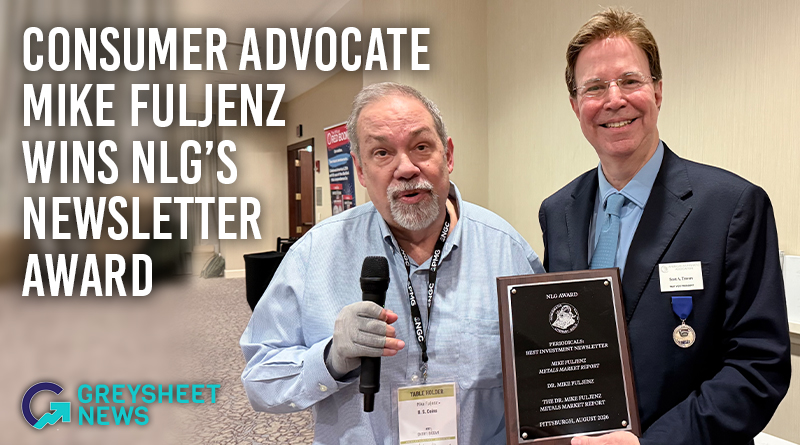
His free weekly newsletter offers insights on the coin and metals markets, and consumer education.

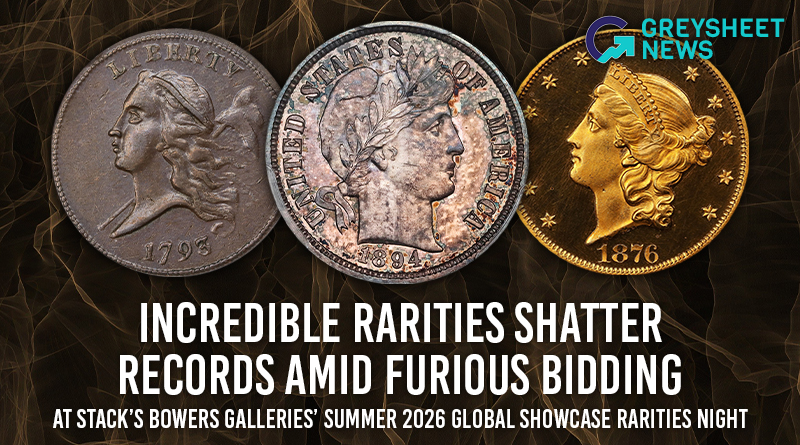
Stack's Bowers Galleries, one of the world's largest and most prestigious rare coin auction houses, is proud to announce record breaking results from the Rarities Night session of its annual Summer Global Showcase Auction.

Scandinavian gold rarities also command exceptional results.
Events
View All Events

Heritage Auctions

Wednesday, July 1, 2026
Thursday, July 2, 2026

DAVID LAWRENCE RARE COINS
Sunday, July 5, 2026