




 Whitman Expo
U.S. Gold and Silver Coins as Legal Tender — What Gives?
Aren’t most U.S. gold and silver coins legal tender already?
by Armen Vartian |
Published on August 18, 2025

Download the Greysheet app for access to pricing, news, events and your subscriptions.

Subscribe to The Greysheet for the industry's most respected pricing and to read more articles just like this.
Advertisement
Lately we’ve seen articles in the press about U.S. gold and silver coins being "declared legal tender" in states like Utah, Florida, and Texas. While some of these laws are complex, they all involve the concept of gold and silver coins being treated not as commodities, but as currency. This is an important distinction, because it prevents the state from collecting sales tax on purchases and sales of precious metal coins, and the federal or state governments collecting income tax on gains from resale of the coins. If you convert U.S. dollars into Euros and back again, there’s neither sales tax nor capital gains tax—these recent state laws extend that same treatment to gold and silver coins.
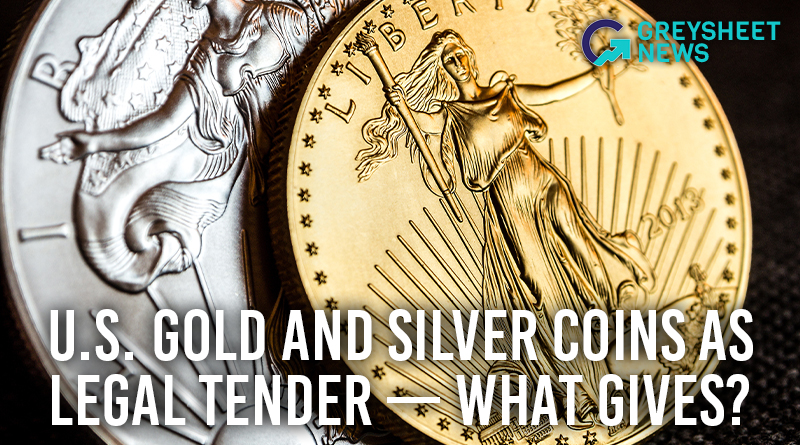
But wait a minute—aren’t most U.S. gold and silver coins legal tender already? The answer is yes. Circulating pre-1933 gold and pre-1964 silver coins all have congressionally-mandated denominations and the U.S. Government has never "demonetized" them. A Morgan Dollar is still one dollar U.S. legal tender, and a $20 Saint-Gaudens gold piece is still $20 U.S. legal tender. Modern bullion coins such as Gold Eagles and Silver Eagles likewise have denominations, even though those denominations are nominal, i.e. substantially below the metal value of the coins by weight. Were states to legislate that these coins carry additional legal tender value based on their metal weight and purity, in theory Americans could carry on business using those coins instead of U.S. paper money and circulating coinage.
Unfortunately for advocates of "hard money" alternatives to "fiat currency," we are a long, long way from seeing precious metal coins become actual legal tender. The reason is simple. States may promote gold and silver coins and other items as money, and may even encourage merchants and consumers to use them in commerce, but the concept of "legal tender" involves mandatory acceptance—a coin or certificate that is true legal tender must be accepted by a merchant or consumer. No U.S. state has gone that far yet, and we can see why. A gold coin has a value, but what is that value from one day to the next? How would a merchant price the items he or she sells in gold if the value of the gold changes from day to day (minute to minute, actually)? A baker might sell a loaf of bread at a profit in exchange for a 1/20 gram gold coin today, but accepting that same coin the next day might result in a loss to the baker. So the baker would not only have to deal with changing costs of the flour, yeast and salt needed to make bread, but also with the shifting value of the money customers are using to pay for that bread.
This dilemma also impacts the use of cryptocurrencies in actual commerce—only a tiny fraction of market participants conduct business in cryptocurrency without converting it into conventional (government-backed) legal tender first. This would be the case for gold and silver as well. When countries such as the U.S. were on the gold standard, the denominations stamped into gold coins matched their market value as gold—what the relevant government paid for gold in the international marketplace. Currently, national currencies "float" relative to gold, and until that situation changes, don’t expect much movement toward making precious metal coins true "legal tender."

Related Stories (powered by Greysheet News)
View all news
In the absence of any specific contractual provisions addressing the point, buyers' rights of rejection are governed by the Uniform Commercial Code as enacted in the relevant state.

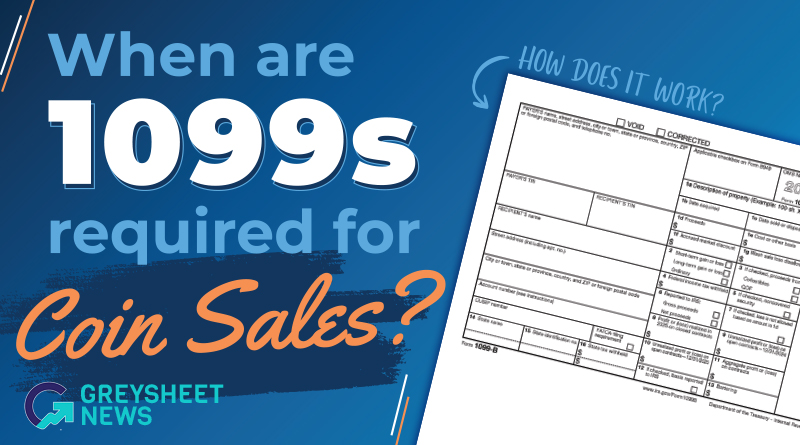
A 1099-B form requires reporting the seller's full name, address and Social Security number.

Please sign in or register to leave a comment.
Your identity will be restricted to first name/last initial, or a user ID you create.
Comment
Comments