



 Whitman Expo



The Lipton Gallery is displaying a $3 million Augustus Saint-Gaudens statue that inspired the famous, similar design for Double Eagle gold coins.
Thank you to our sponsors!
Go check them out!







A specially struck example of one of the rarest types in the American series. Fastidious detail is present on both sides, a remarkable victory for the Philadelphia Mint coiner who was able to capture every engraver stroke in the hair, the veins in every leaf, every denticle, and every feather of the eagle’s wings. The high relief of the portrait of Liberty created some difficulty in getting metal to flow into the central reverse recesses, so the feathers of the eagle’s breast are present but perhaps not as sharp. The stars show good centers, and the rims are nicely squared. Some modest doubling is seen, along the left side of the date numerals and the stars at left, as well as among some denticles. Lint marks, often taken as evidence of gentle polishing of the die face pre-striking, are plentiful on both obverse and reverse, with several large ones on Liberty’s shoulder, in what would have been the lowest recess of the obverse die. A batch is also present in the lower left obverse, as well as the left side of the reverse near 9:00. The surfaces are somewhat reflective, mostly untoned but for a light golden tint. Faint hairlines are present on both sides, along with scattered handling marks, though none are individually serious. A planchet striation and light lamination are noted at NI of UNITED. Early die state, with no evidence of a die crack.
A famous and important specimen with a fine provenance, this is the only example of this design type to have ever been recognized by PCGS as a specially struck piece, likely coined for presentation or other non-circulation function. Ron Guth described this piece for PCGS CoinFacts:
“This is one of the most remarkable of all early U.S. coins. It is a fully prooflike 1796 half dollar, replete with lint marks on both sides from where the planchets and/or the dies were wiped before the coin was struck. Lint marks are typical on later Proof coins and they indicate a high degree of special care and preparation. Technically, there are no American Proof coins prior to 1817, but there are several coins (this one included) that were obviously made for a special purpose, thus they are called Specimen coins. There is no other 1796 half dollar like this. It has a great pedigree going back to the Allenburger and Judd collections, the latter being the well-known author of the standard reference book on U.S. pattern coins.”
While other high grade and prooflike specimens exist of this type, most of them reviewed by PCGS over the years, none have shown the characteristics PCGS looks for when determining what constitutes a Specimen strike. It is unlikely that any other specimen will make the leap from a standard circulation strike to a Specimen strike in the future. Struck with special preparation and forethought by the coiners, Specimens are coins produced not as a tool or a store of value, but as the highest artistic representation of a coiner’s craft. This coin was not struck to be spent; it was struck to exemplify the level of achievement possible in the first United States Mint.
From the Stack's Bowers Galleries catalog description of the D. Brent Pogue Collection in May 2015.
Obverse Description
Liberty is portrayed with a so-called "draped bust," facing right, with her hair tied back with a ribbon. She is flanked by stars on the left and right periphery with the word LIBERTY on top, and the date positioned at the bottom.
Reverse Description
The so-called "small eagle" is portrayed standing atop rocks motif in the center with wings fully surrounded by an olive wreath that is tied by a ribbon into a bow at the bottom. The words UNITED STATES OF AMERICA around the periphery. The denomination is spelled out as a fraction of "1/2" at the bottom, under the bow.
Source: Stack's Bowers
Catalog Information
GSID:
6126
Designer:
Robert Scot
Obverse Designer:
Robert Scot
Obverse Lettering:
LIBERTY, 1796
Reverse Designer:
Robert Scot
Reverse Lettering:
UNITED STATES OF AMERICA, 1/2
Fineness:
0.89
Weight (gr):
13.48 gr
Weight (oz):
0.4755 oz
Precious Metal Weight:
0.3868 oz
Strike Type:
Specimen
Diameter:
32.5
Coin Shape:
Round
Edge:
Lettered
Variety:
15 Stars
Variety 2:
Special Strike
Coin Date:
1796
Denomination:
50c
Designation:
SP
Mint Location:
Philadelphia
Mintage:
3,918
Coinage Type:
Draped bust half dollar
Coinage Years:
1796-1797
Composition:
89% silver; 11% copper
Rarity:
8
PCGS #:
86057
Send Catalog Feedback
To: editor@greysheet.com
Subject: I would like to contribute catalog info to CDN for 1796 50c 15 Stars, Special Strike SP
Body: Referring page: http://livetest.greysheet.com/prices/item/1796-50c-15-stars-bust-half-dollar-specimen/gsid/6126 GSID: 6126 Title: 1796 50c 15 Stars, Special Strike SP
Subscribe to View
Log In
View more data, info, and visualizations. Get access to retail and wholesale pricing as well as auction data.
Coin Value History
1796 50c 15 Stars, Special Strike SP
Currency
Grade Range
Grading Authority
Sort by
Pricing
Values
Greysheet & CPG® Values
Draped Bust Half Dollar 50c Small Eagle, 1796-1797 MS [Type]
![Draped Bust Half Dollar 50c Small Eagle, 1796-1797 MS [Type]](https://images.greysheet.com/ctc/catalog/1797-obv.jpeg?MaxWidth=200&Mode=Pad&Scale=UpscaleCanvas&format=webp)
Worth: $24,000 – $1,800,000
1796 50c 15 Stars MS

Worth: $24,000 – $750,000
1796 50c 16 Stars MS

Worth: $24,000 – $1,800,000
1797 50c MS

Worth: $24,000 – $2,000,000
Draped Bust 50c Heraldic Eagle, 1801-1807 MS [Type]
![Draped Bust 50c Heraldic Eagle, 1801-1807 MS [Type]](https://images.greysheet.com/ctc/catalog/1807-obv.jpg?MaxWidth=200&Mode=Pad&Scale=UpscaleCanvas&format=webp)
Worth: $120 – $150,000
1801 50c MS

Worth: $600 – $396,000
1802 50c MS

Worth: $950 – $104,400
1803 50c Large 3 MS

Worth: $220 – $175,000
1803 50c Small 3 MS

Worth: $210 – $225,600
1805/4 50c MS

Worth: $240 – $156,000
1805 50c MS

Worth: $220 – $50,000
1806/5 50c Large Stars MS

Worth: $220 – $222,000
1806 50c Knob 6, Small Stars MS

Worth: $160 – $48,000
1806 50c Knob 6, No Stem MS

Worth: $36,000 – $126,000
1806 50c 6 over Inverted 6 MS

Worth: $200 – $72,000
Greysheet News
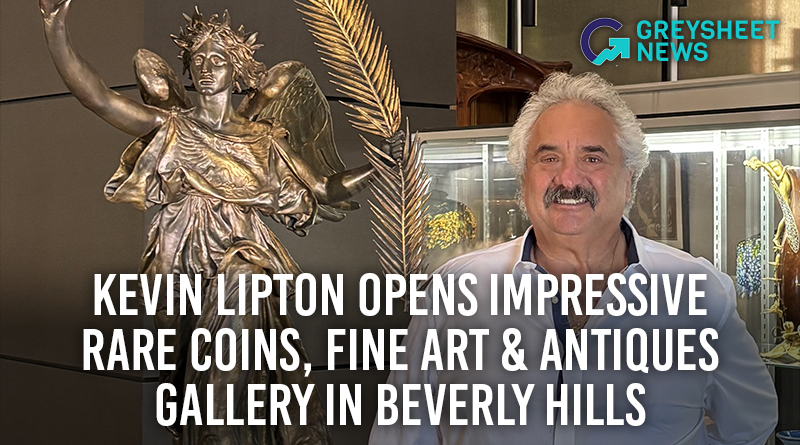
Kevin Lipton Opens Impressive Rare Coins, Fine Art & Antiques Gallery in Beverly Hills
9/24/2026
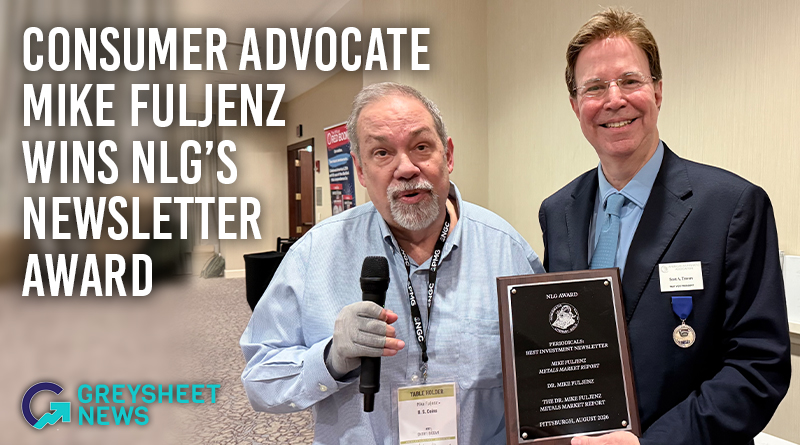
Consumer Advocate Mike Fuljenz Wins NLG's Newsletter Award
His free weekly newsletter offers insights on the coin and metals markets, and consumer education.
9/15/2026
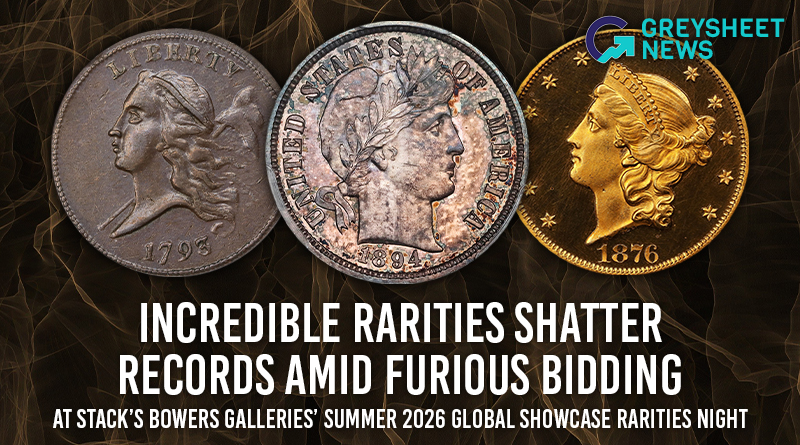
Incredible Rarities Shatter Records Amid Furious Bidding at Stack's Bowers Galleries' Summer 2026 Global Showcase Rarities Night Session
Stack's Bowers Galleries, one of the world's largest and most prestigious rare coin auction houses, is proud to announce record breaking results from the Rarities Night session of its annual Summer Global Showcase Auction.
9/15/2026
Events
Heritage Auctions: US Coins Tuesday & Wednesday Select Auction
Location: Heritage Auctions
Wednesday, July 1, 2026
Heritage Auctions: World & Ancient Coins Wednesday & Thursday Select Auction
Location: Heritage Auctions
Thursday, July 2, 2026