




 Whitman Expo
Carthage Gold Stater Leads Heritage’s LII Collection Ancient Coins Auction to $823,683
Heritage’s Sept. 8 Ancient Coins Showcase Auction achieves 100% sell-through rate as Greek, Ptolemaic, Macedonian and Judaean rarities deliver strong results.
by Heritage Auctions |
Published on September 17, 2026

Download the Greysheet app for access to pricing, news, events and your subscriptions.
Subscribe to Greysheet for the industry's most respected pricing and to read more articles just like this.
A superb gold stater from ancient Carthage, struck circa 350-320 BC and distinguished by its graceful artistry and sharply defined dies, realized $41,480 to lead Heritage’s Sept. 8 The LII Collection of Historical Coins and Medals, Part II Ancient Coins Showcase Auction to $823,683.
The auction achieved a 100% sell-through rate by both value and lots sold, with collectors pursuing an array of ancient Greek, Ptolemaic, Macedonian, Judaean, Lydian and Roman coins.
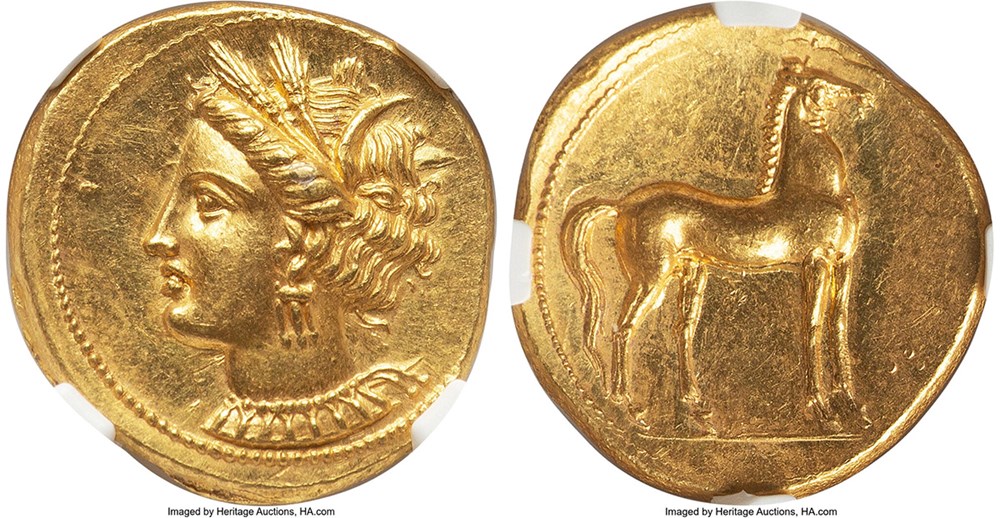
The event’s top result belonged to a ZEUGITANA. Carthage. Ca. 350-320 AV stater graded NGC Choice MS 5/5 - 4/5, Fine Style, which ended at $41,480. The obverse features a bust of Tanit facing left, her hair wreathed with grain ears and complemented by a triple-pendant earring and seven-pendant necklace. The reverse depicts a horse standing right, with three pellets near its shin. Struck from sharply defined dies on blazing surfaces, the coin combines exceptional preservation with the graceful artistic style associated with the series.
A PTOLEMAIC EGYPT. Arsinöe II Philadelphus AV mnaieion or octodrachm graded NGC AU 5/5 - 3/5, Fine Style, light marks, followed at $34,160. The posthumous issue of Alexandria was struck under Ptolemy II circa 251/250 BC and depicts the veiled head of the deified Arsinöe II wearing a diademed stephane and horn of Ammon. Its reverse bears a double cornucopia filled with pyramidal cakes, pomegranates and other fruits, with grape clusters hanging from each horn. The substantial gold issue was struck from dies of delicate style on a satiny flan.
Another gold coin ranked among the auction’s leading results when a MACEDONIAN KINGDOM. Philip II AV stater, graded NGC AU★ 5/5 - 5/5, realized $23,180. A late posthumous issue from Amphipolis III A under Philip III Arrhidaeus, circa 323/322-315 BC, the coin features the laureate head of Apollo on its obverse and a charioteer driving a fast biga on the reverse. Boldly struck and beautifully centered, it retains considerable luster along with smoldering orange toning.
A JUDAEA. Jewish War AR shekel, graded NGC Choice AU★ 5/5 - 5/5, reached $20,130. Struck in Jerusalem and dated Year 3, corresponding to April AD 68-May AD 69, the silver shekel bears a ritual chalice and the Paleo-Hebrew inscription “Shekel of Israel” on the obverse. Its reverse features a staff with three pomegranate buds accompanied by “Jerusalem the holy” in Paleo-Hebrew. The coin was struck on an exceptionally good metal flan.
Among the earliest coins featured in the auction, a LYDIAN KINGDOM. Croesus AR stater or double-siglos, graded NGC Choice XF★ 5/5 - 4/5, brought $17,080. Struck at Sardes to the Croeseid standard, the coin presents the celebrated confronted foreparts of a lion and bull on the obverse, with two unequal square punches on the reverse. Nearly complete devices remain visible across its dove-gray surfaces, contributing to its exceptional eye appeal.
Also realizing $17,080 was an IONIA. Ephesus. Ca. 4th century BC. AR tetradrachm, graded NGC AU★ 5/5 - 3/5, Fine Style. Dating to circa 350-340 BC and naming Antialcidas as magistrate, the tetradrachm displays the bee of Ephesus with straight wings on the obverse. The reverse depicts the forepart of a stag kneeling right with its head reverted and a palm tree behind. The well-centered example retains all of its principal details along with bright high points.
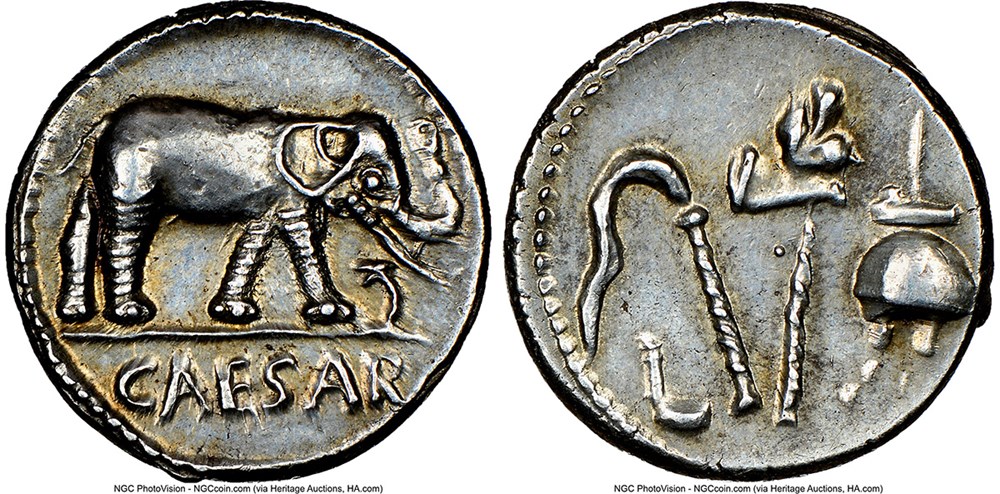
Roman coinage also figured prominently in The LII Collection, including a Julius Caesar, as Dictator. AR denarius, graded NGC Choice AU★ 5/5 - 5/5, that realized $15,860. Struck at a military mint traveling with Caesar in northern Italy circa 49-48 BC, the denarius depicts an elephant advancing right and trampling a horned serpent beneath the name CAESAR. The reverse presents a group of pontifical implements: a simpulum, aspergillum, securis and apex.
Complete results can be found at HA.com/61649.

Related Stories (powered by Greysheet News)
View all news
Scandinavian gold rarities also command exceptional results.

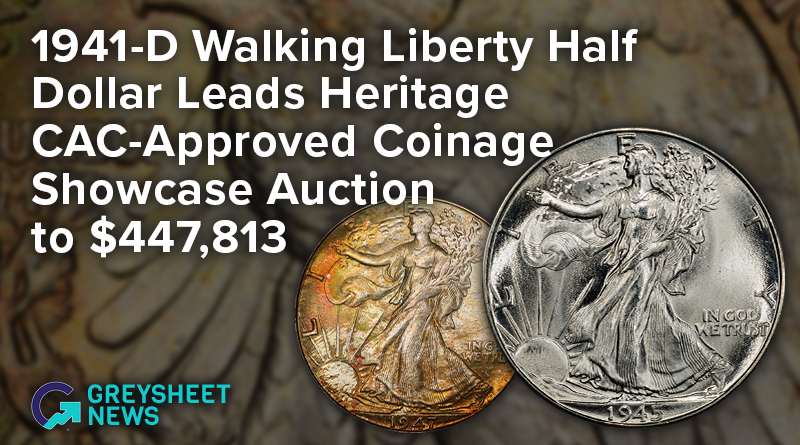
CAC-approved Walking Liberty half dollars claim three of the auction's top four results.
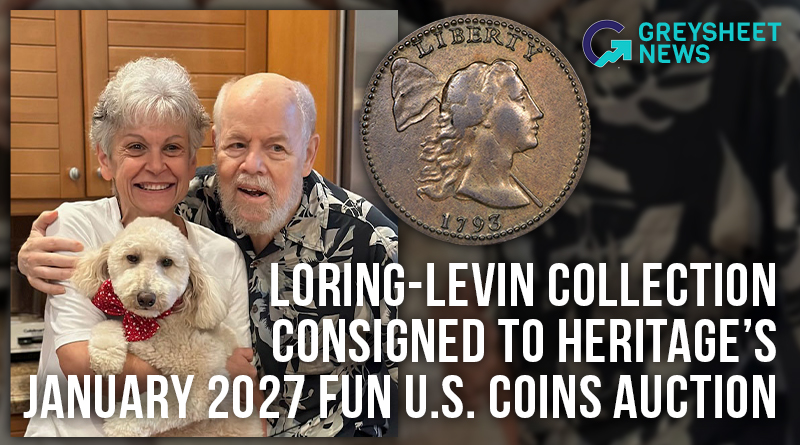
Denis W. Loring was among Early American Coppers' Charter Members.
Please sign in or register to leave a comment.
Your identity will be restricted to first name/last initial, or a user ID you create.
Comment
Comments