

Modern US Olympic Coinage
The Olympics as we know them began in 1896, but it took until 1952 for the first modern Olympic coin to be struck.
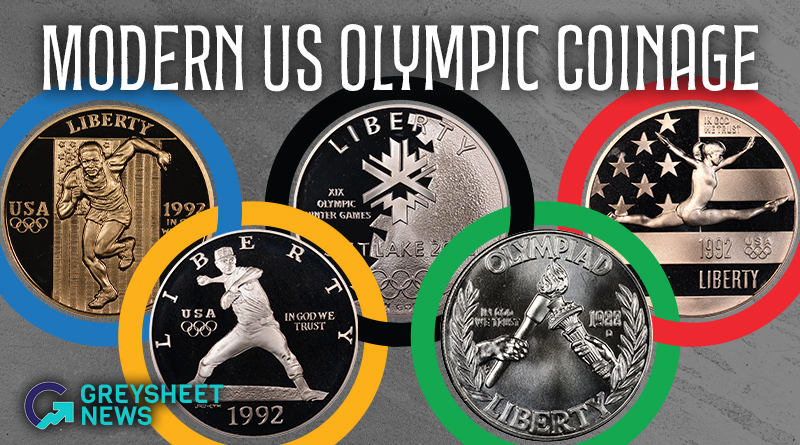
The Olympics as a competition began in Greece in roughly 776 BC and were celebrated every four years as is traditionally done today. These celebrations were political, artistic, religious, and athletic in nature and occasionally coins were struck commemorating these events.
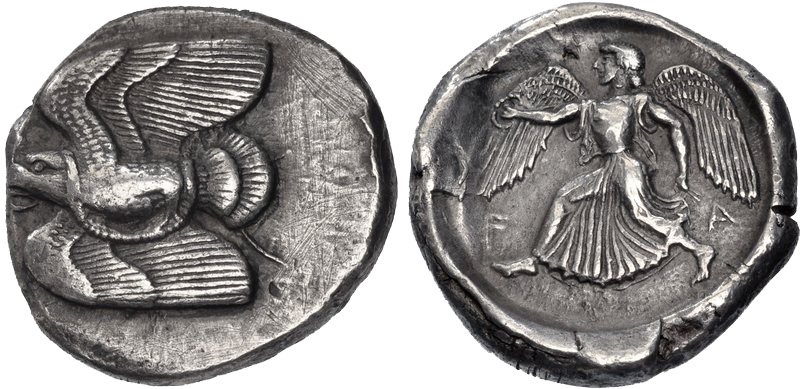
One early coin that commemorated these Olympic Games was struck in the 460s BC and depicts an eagle flying to the left on the obverse, and a depiction of the Greek Goddess, Nike, who represents victory, on the reverse. She is depicted as running while holding a wreath, presumably to crown an Olympic victor.
But the rise of Christianity overcame the strength of a pagan celebration as far as the Olympic Games were considered. Around 400 AD, the Olympic games of Ancient Greece ended. For the next 1,500 years, no Olympic Games were held. But in 1896, the Olympic Games were, once again, revived and a number of the original games and traditions were reinstituted.
The first Olympic Games in the United States were held in 1904 in St. Louis, during the World’s Fair for the celebration of the centennial of the Louisiana Purchase. It was the last time that the Olympics were held in conjunction with a World’s Fair. The next Olympics held in the United States didn’t occur until 1932, when the Summer Olympics were held in Los Angeles and the Winter Olympics were at Lake Placid, New York.
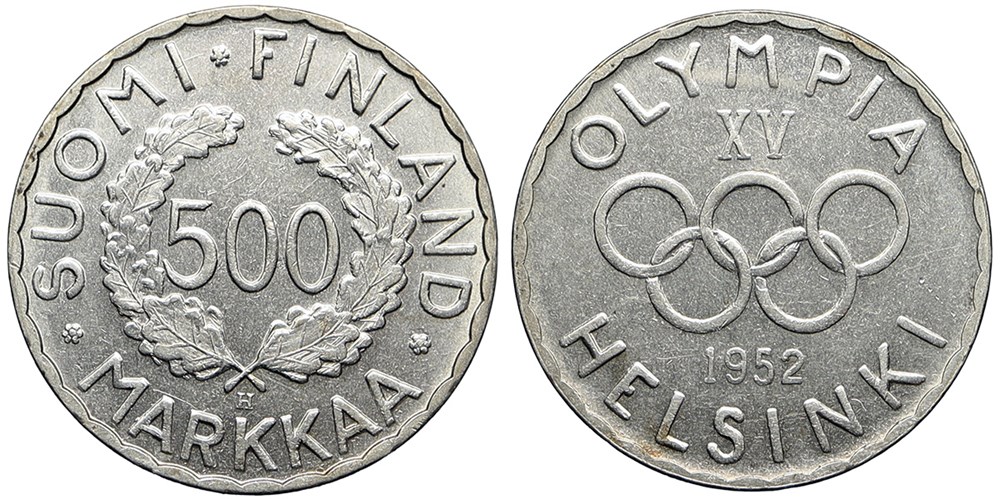
It took until 1952 for the first modern Olympic coin to be struck. Finland struck a 500 Markkaa silver coin to sell them as a souvenir and raise funds to diffuse the costs of hosting the Winter Olympics in Helsinki.
While not struck by the United States Mint, Olympic coins were struck by the Royal Canadian Mint in 1976 for the Winter Olympics. The RCM had put together a very ambitious series of coins for collectors to enjoy. Between 1974 and 1976, the RCM sold a series of twenty-eight .925 Sterling silver coins and two gold coins, one of 14 karat fineness and one in 22 karats. Due to our close proximity, these coins were very popular in the United States.
The year 1984 marked an important year in United States Olympic coinage history. The Summer Olympics were occurring once again in Los Angeles. The United States Congress authorized legislation that created three different coins: 1983 and 1984-dated silver dollars and a gold five-dollar coin.
The 1983 Olympic silver dollar coin was designed by the Chief Engraver of the United States Mint, Elizabeth Jones. The obverse depicts a male figure, in a silhouette, that depicts motion by the staggered background figures. It is a highly unusual and creative design. It harkens the viewer back to the ancient Greek discus thrower. Around the outer periphery are inscribed the expected mottoes as well as the Olympic "Star in Motion," logo and the five Olympic rings. The reverse depicts an American bald eagle facing to the left, with the appropriate mottoes and the denomination.
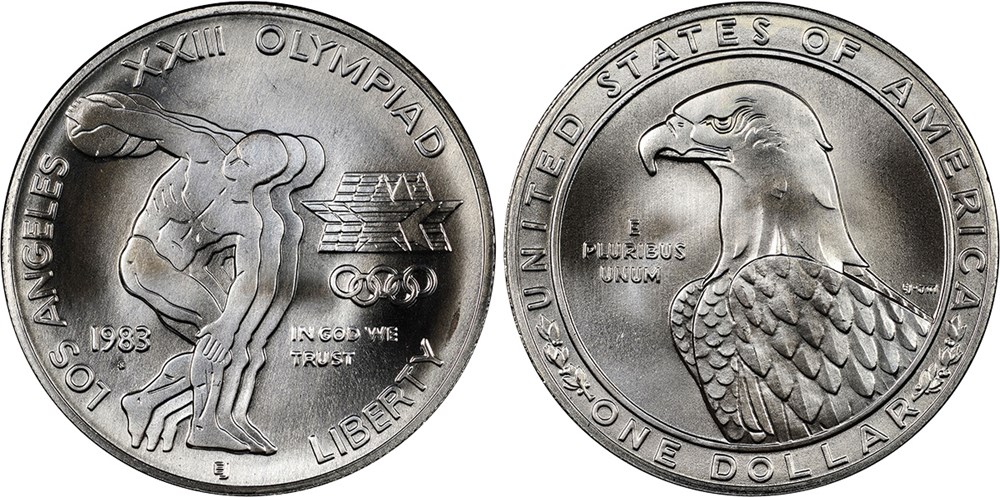
Commemorative Silver Dollar, Discus Thrower.
The 1984-dated silver dollar coin celebrating these Olympics depicted the Olympic Gateway, the entrance to the Olympic Coliseum in Los Angeles. It was designed by artist Robert Graham and above the archway and the columns there are two Greek-style statues that are headless, which are separated by the symbolic Olympic flame.
The reverse of the coin depicts an American bald eagle, facing to the right, which is perched on a rock. The eagle is holding an olive branch in one of its talons.
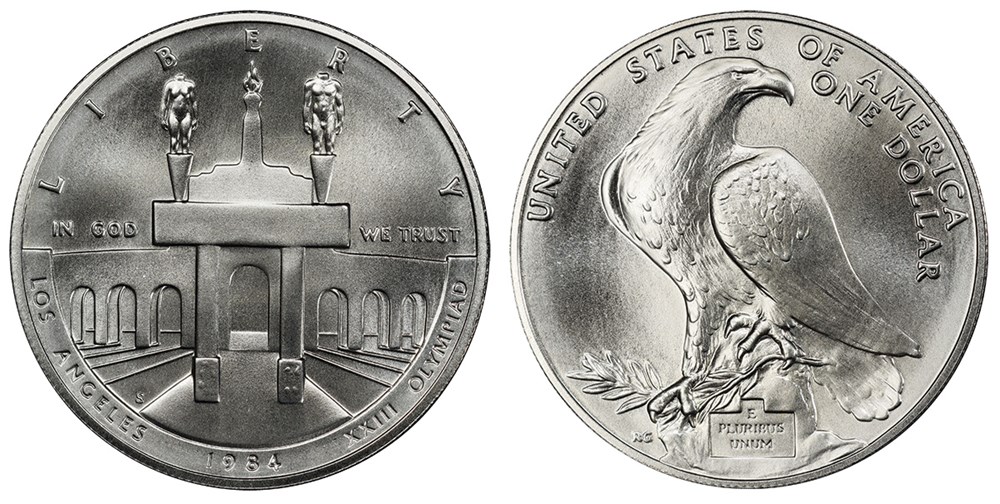
Commemorative Silver Dollar, LA Coliseum.
There was also a 1984-dated $10 gold coin for these Los Angeles Olympics. It was the very first gold commemorative since the 1926 Sesquicentennial Quarter Eagle and the most recent gold coin struck since the 1933 Indian Head Eagle.
John Mercanti designed both the obverse and reverse of this commemorative gold coin, which was based on a sketch by U.S. Mint graphic artist James Peed. The obverse depicts both a male and a female runner, jointly holding the Olympic Torch. Behind the runners are the five Olympic rings.
The reverse depicts a heraldic style American bald eagle with a number of arrows in her left talon and an olive branch in her right. A ribbon is in the eagle’s beak, and there are 13 five-pointed stars above the eagle. While on the lower periphery is the denomination spelled out in two words.
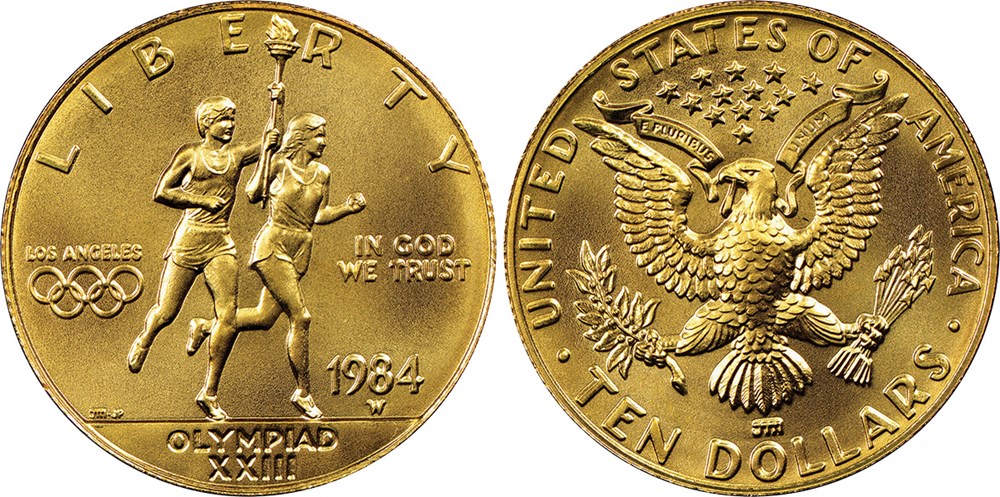
Commemorative Gold, LA Coliseum.
Both silver dollar coins were offered as P-D-S Uncirculated coins and as S-Mint Proof coins. The $10 gold coin was struck at West Point (W) as an Uncirculated coin, and as P-D-S and W Proof coins. The United States Mint struck thirteen different versions of the 1983 and 1984 silver dollars and 1984 gold coin.
The next time the United States Mint struck Olympic-themed coins was in 1988. The Summer Olympics were held in Seoul, South Korea and the Winter Olympics were held in Calgary, Canada. The United States Congress authorized an Olympic silver dollar and five-dollar gold coin.
The 1988 Seoul Olympic Silver Dollar obverse was designed by artist Patricia L. Verani. Her design depicted two hands, one holding Lady Liberty’s torch and the other holding the Olympic torch, while both are inside of a laurel wreath.
The reverse of this silver dollar was designed by designer Sheryl Winter. Her design depicted the five Olympic rings with the letters "U S A" above the rings. The rings are contained with a laurel wreath. Above "U S A" is the denomination on two lines "1 DOLLAR."

Torches and Olympic Rings.
The 1988 $5 Seoul Olympiad gold coin was also designed by Elizabeth Jones. It depicted the head of the Greek goddess of Victory, Nike, facing to the left. The reverse was designed by Marcel Jovine and it depicts the Olympic Flame, the Olympic Rings above with "USA" embedded in the rings and all of the necessary mottoes are depicted.
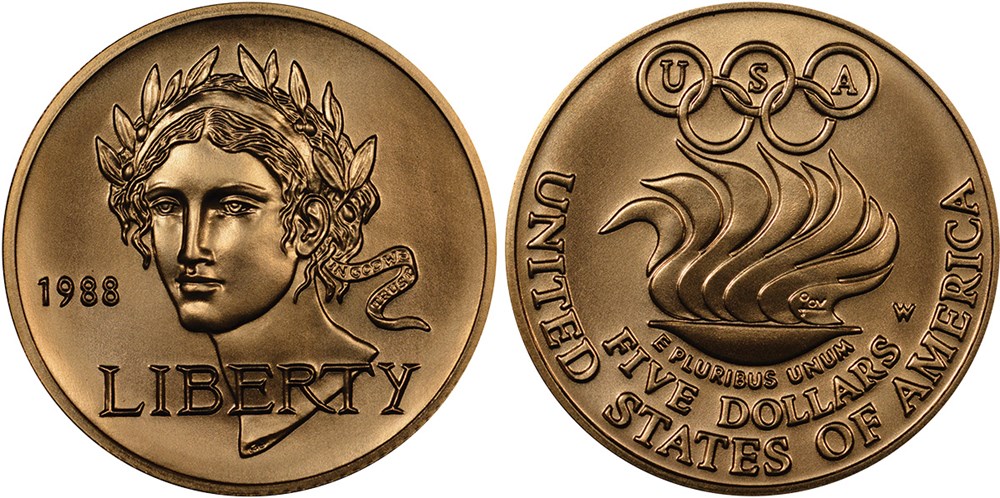
Nike and the Olympic Flame.
The 1992 Olympics, both Summer and Winter versions, were the XXV ‘modern’ Olympics and they were held outside of the United States, in Barcelona, Spain and Albertville, France, respectively. The United States Mint created a clad half dollar, a silver dollar, and a $5 gold coin to commemorate the Olympiad and to raise funds for use by the U.S. Olympic Committee.
The obverse of the clad half dollar features a female gymnast in motion on a field of the American flag and the Olympic rings. It was designed by artists William Cousins. Steven Bieda designed the reverse which depicts the Olympic Torch crossing with an olive branch.
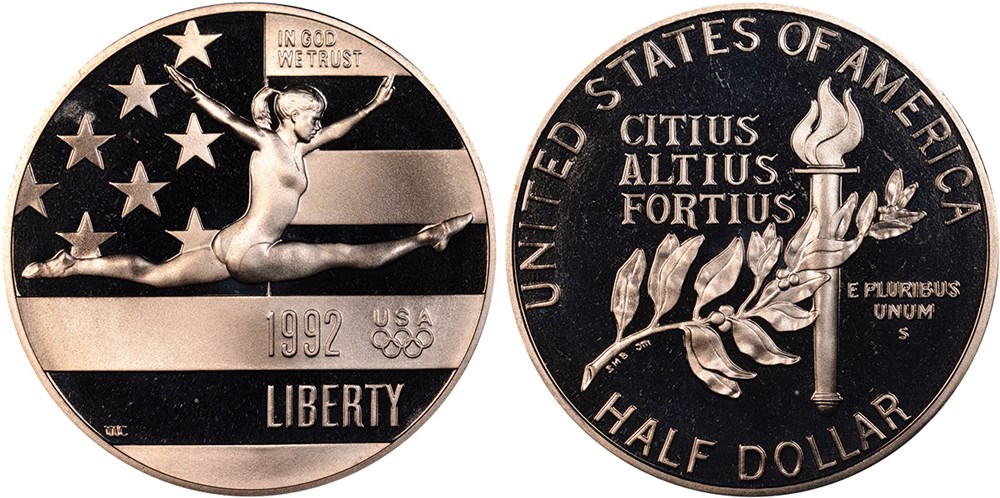
Gymnast and Olympic Torch.
The silver dollar for the 1992 Olympics was a popular coin as it featured a baseball pitcher firing a pitch with the Olympic rings also displayed and was designed by John Deecken. The reverse of this coin was designed by Marcel Jovine and displays an American shield with stars and stripes as well as the Olympic rings, and olive branches.
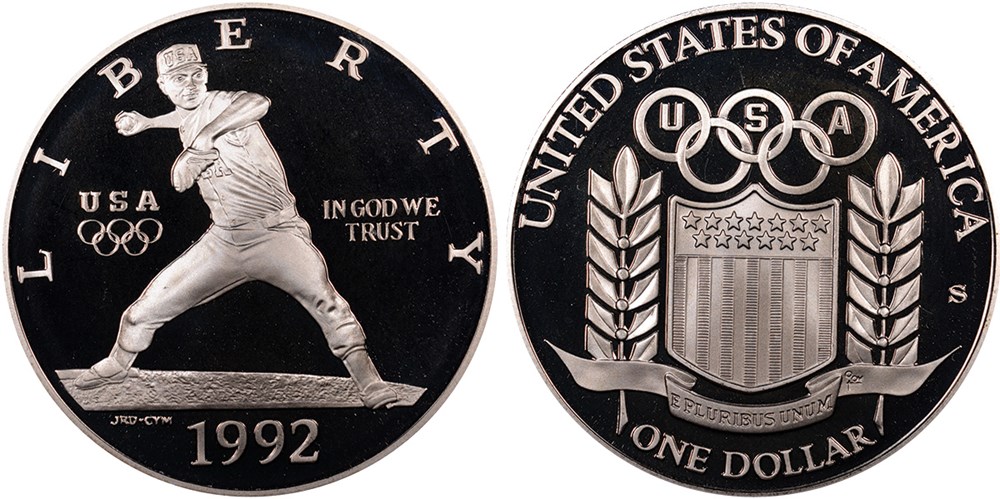
Baseball Pitcher and American Shield
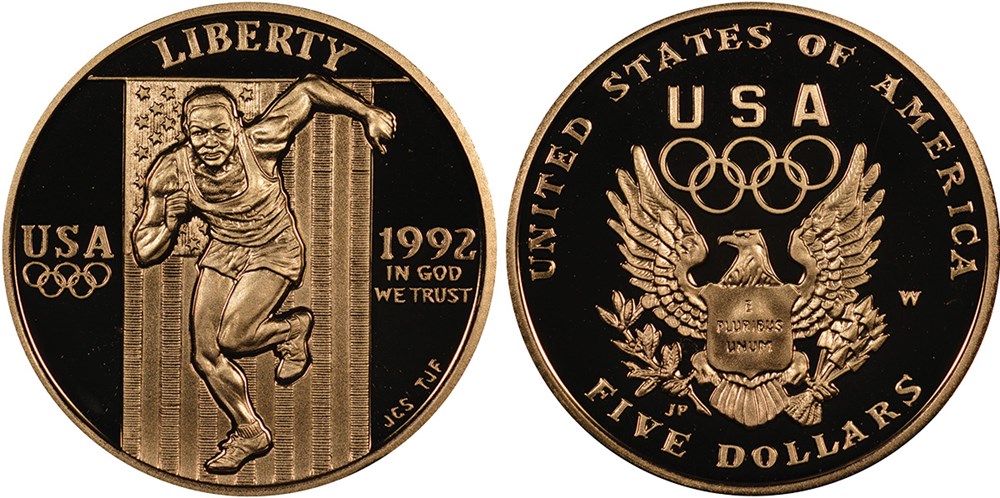
The 1992 Olympic $5 gold coin displayed an attractive design of a sprinter heading towards the viewer with an American flag in the background, as designed by James Sharpe. The reverse depicts an American Bald Eagle, shield covering her chest, with the Olympic Rings and "U S A" above. It was designed by James Peed.
In 1996, the Summer Olympics were held in Atlanta, Georgia. Unfortunately, they are most remembered for the Olympic Park bombing by the American terrorist Eric Rudolph. However, coin collectors may also remember these Olympic Games as the event that nearly bankrupted collectors everywhere as the United States Mint issued sixteen different coin designs, each struck in both Uncirculated, and Proof, for a total of thirty-two coins. This was more than most collectors wanted or were able to afford and they complained loudly and long to the United States Mint.
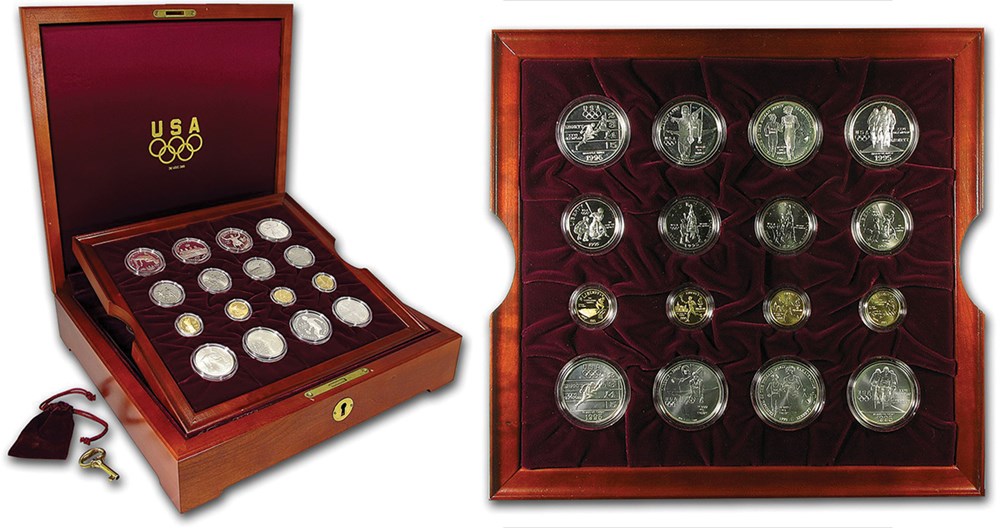
The 32-piece U.S. Olympic coin set was, unquestionably, the most elaborate American commemorative coin set ever devised. The sets were housed in a cherrywood box, with two trays, each holding sixteen coins. Overall, the set contains the following coins:
- Eight clad half dollars depicting Baseball, Basketball, Soccer and Swimming, in both UNC and Proof.
- Sixteen silver dollars depicting a Blind Runner, Cycling, Gymnast, High Jump, Rowing, Tennis, Track, and a Wheelchair Athlete in both UNC and Proof.
- Eight $5 gold coins depicting the Flag Bearer, Olympic Cauldron, the Olympic Stadium, and the Olympic Torch Runner, again, in both UNC and Proof.
The complete set contains a total of 1.935 Troy Ounces of gold and 12.37 Troy Ounces of silver.
The most recent Olympic coins struck by the United States Mint were minted in 2002 to commemorate the Winter Olympics that were held in Salt Lake City. Based on the dismal sales of the 1995–1996 Atlanta Olympic coins, this set comprised only two designs—one silver dollar and one five-dollar gold coin, but each was struck in Uncirculated and Proof for a total of four coins.
On the obverse of the silver dollar Chief Engraver John Mercanti re-created the logo of these Olympic games—a stylized version of an ice crystal along with the Olympic rings and the usual mottoes. The reverse of this silver dollar was designed by artist Donna Weaver and it displays a view of the Salt Lake City skyline and the Rocky Mountains beyond.
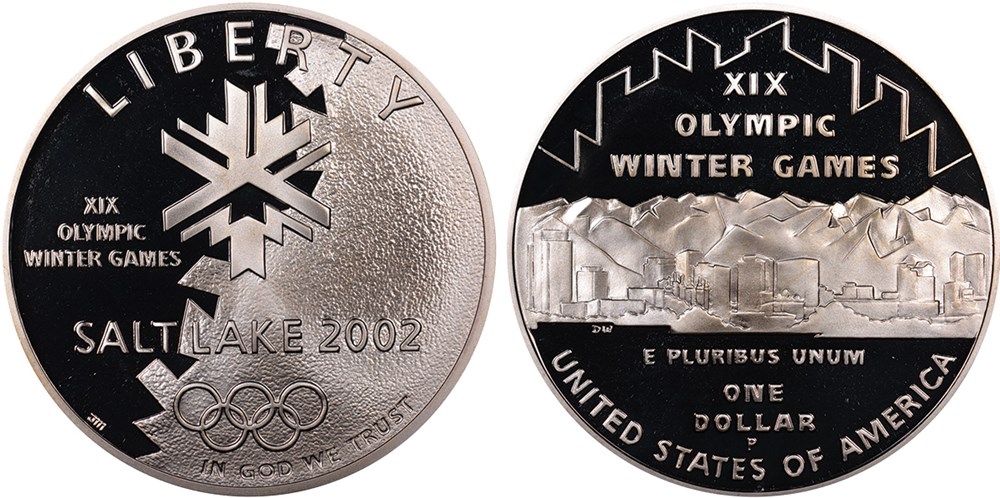
Stylized Logo of 2002 Winter Olympics.
On the gold coin, the Mint’s Donna Weaver designed both the obverse and reverse of the coin. Again, she was influenced by the logo of these Olympics and the obverse depicts a beautiful interpretation of the logo while her reverse design is yet another stylized design, this time depicting the large cauldron holding the Olympic flame.
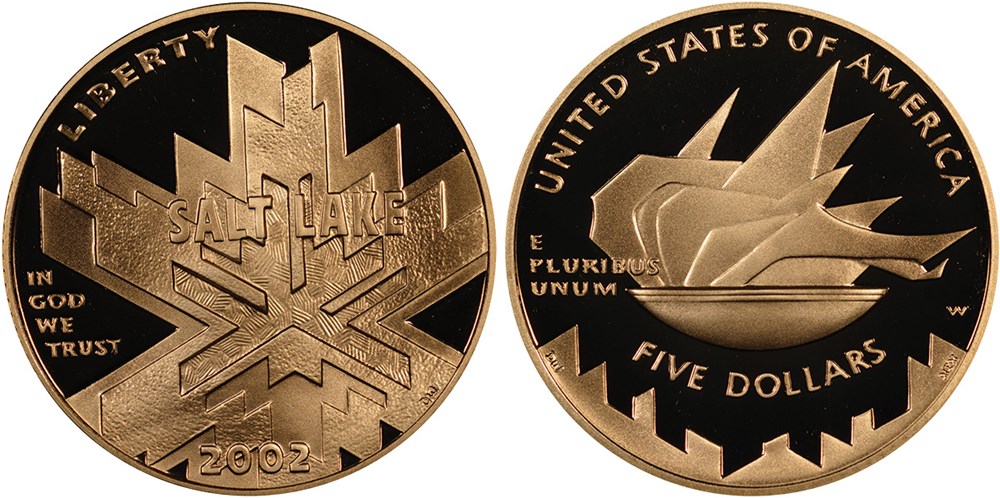
the Salt Lake City Olympics and Stylized Olympic Cauldron.
While the Mint is incredibly busy with both circulating coinage and commemorative coinage designs for the upcoming 2026 Semiquincentennial, there are more Olympic coin designs on the horizon. In 2028, the Summer Olympic games will be once again held in Los Angeles, as they were in 1932 and in 1984.
I had the distinct privilege of consulting for the U.S. Olympic and Paralympic Committees on the coin legislation that they were seeking to create for 2028. These Committees will receive an allocation of the coins struck by the United States Mint. The sale of these Olympic coins will provide funds for training and support of our American athletes who truly are a great source of American pride. In addition, these coins are a lasting reminder of the true spirit of the Olympic games.
"Citius, Altius, Fortius" is the motto of the Olympic Games. Throughout world history, the Olympic games have symbolized unity and the strength and achievements of the human spirit.
Those three Latin words fittingly describe the effort of these world class athletes: "Swifter, Higher, Stronger."

Download the Greysheet app for access to pricing, news, events and your subscriptions.
Subscribe Now.

Subscribe to The Greysheet for the industry's most respected pricing and to read more articles just like this.
Visit these great CDN Sponsors
CDN Sponsors





Author: Michael Garofalo
 Mike Garofalo has been a coin dealer for over 40 years and recently retired as Director of Numismatics from APMEX. He has been both a wholesale dealer and a retailer. A prolific writer, he enjoys bringing to light previously unknown numismatic facts. He can be reached at Mike@NumismaticAuthor.com
Please sign in or register to leave a comment.
Your identity will be restricted to first name/last initial, or a user ID you create.
Comment
Comments