




 Whitman Expo
Continental Currency and Paul Revere-Engraved Massachusetts Notes Lead Heritage’s Winter Colonial Currency Showcase Auction
Scarce Yorktown Continental issues, high-grade Franklin & Hall Pennsylvania Bills of Credit also among March 8 event highlights.
by Heritage Auctions |
Published on March 11, 2026


Download the Greysheet app for access to pricing, news, events and your subscriptions.
Subscribe to The Greensheet for the industry's most respected pricing and to read more articles just like this.
Advertisement
Heritage Auctions’ Winter Colonial Currency Showcase Auction, held March 8, delivered a $255,068 total with spirited results across historically resonant emissions from the American Revolution and the decades leading up to it. Featuring well-preserved Colonial Currency and Continental Currency — notes that document early American fiscal policy, wartime finance and anti-counterfeiting ingenuity — the auction drew strong demand for problem-free survivors and visually compelling designs that continue to define the collecting categories of Revolutionary War currency and Colonial paper money.
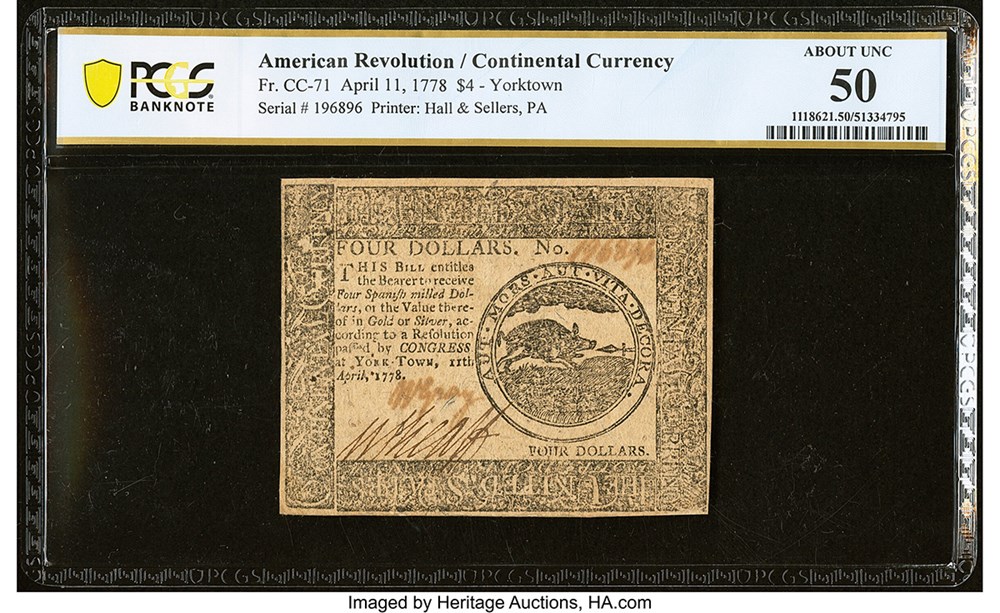
Topping the sale was a Continental Currency April 11, 1778 $4 graded PCGS Banknote About Uncirculated 50, which realized $10,980. Authorized by Acts passed at Yorktown (York, Pennsylvania), the April 11, 1778 emission is widely regarded as the scarcest Continental issue, due in part to extensive counterfeiting efforts intended to undermine confidence in the young nation’s paper money. The emblematic boar charging a spear, paired with the Latin motto AUT MORS AUT VITA DECORA (“Either death or an honorable life”), encapsulates the era’s urgency and resolve; the reverse’s nature print and the Hall & Sellers imprint underscore the period’s evolving mechanics of printing and authentication.
From Pennsylvania’s celebrated Colonial currency tradition comes a Pennsylvania June 18, 1764 3d graded PMG Gem Uncirculated 65 EPQ, which finished at $9,150. Authorized by the Act of May 30, 1764 as part of an emission of £55,000 in legal tender Bills of Credit, the note carries the British coat of arms at left and includes one of early America’s most fascinating security features: the colony’s name intentionally misspelled as “Pennsilvania,” a hidden diagnostic designed to confound would-be counterfeiters. The reverse’s typeset layout bears the enduringly popular printer’s imprint of “B. Franklin, and D. Hall,” making the note a prime intersection of Colonial history, Benjamin Franklin printing, and elite-condition paper money collecting. With a boldly penned signature of T(homas) Wharton, serial number 73220, deep design embossing, full margins, and complete paper originality, the note exemplified the qualities advanced collectors seek in top-grade Colonial issues.
Massachusetts notes engraved and printed by Paul Revere — cornerstones for collectors of Colonial currency and early American engraved paper — also performed well, as was the case with a Massachusetts October 16, 1778 3d graded PMG Choice Uncirculated 63 that realized $5,124. Issued as part of an £8,000 legal tender emission, this denomination features an engaging codfish vignette at upper center, a design element that speaks to the region’s maritime identity and the iconography that distinguishes Massachusetts Colonial notes. The engraved face was printed by Revere, while the reverse was produced by Thomas Fleet, a partnership that places the note at the center of Revolutionary-era printing history.
Another Revere-related Massachusetts issue, a Massachusetts 1779 4s 6d graded PMG About Uncirculated 50 EPQ, closed at $4,392. Revere engraved and printed the faces of notes from this emission, with a face depicting the sun rising and a reverse portraying the iconic pine tree — imagery that remains among the most recognizable motifs in Colonial paper money. Printed on bright paper with bold design elements, and bearing a dark, clear signature of Thomas Dawes alongside decent margins, the note presented as a repair-free survivor without meaningful impairments, an increasingly important distinction in the market for Revolutionary War currency.
Rounding out the auction’s leading results was a Continental Currency February 17, 1776 $2/3 graded PMG About Uncirculated 55 EPQ, which realized $3,294. With wide margins visible on three sides — and the upper left corner showing a small portion of the neighboring note from the original sheet — this example offered collectors both visual appeal and tangible evidence of period production methods. Signed by Thomas Morris, it represented an attractive, historically grounded Continental note from the earliest, most widely collected phases of the Revolutionary era.
Across the Winter Colonial Currency Showcase Auction, collectors demonstrated continuing preference for notes that combine historic relevance, clear eye appeal, and strong technical preservation. The results further underscore the depth of demand for problem-free survivors and high-grade examples — especially those connected to iconic printers and engravers, and those bearing distinctive emblems, mottos, vignettes and diagnostics that reward close study.
Complete results can be found at HA.com/62427.
Related Stories (powered by Greysheet News)
View all news
Ingots from S.S. Central America and noted featured collections also among March 26-28 event highlights.

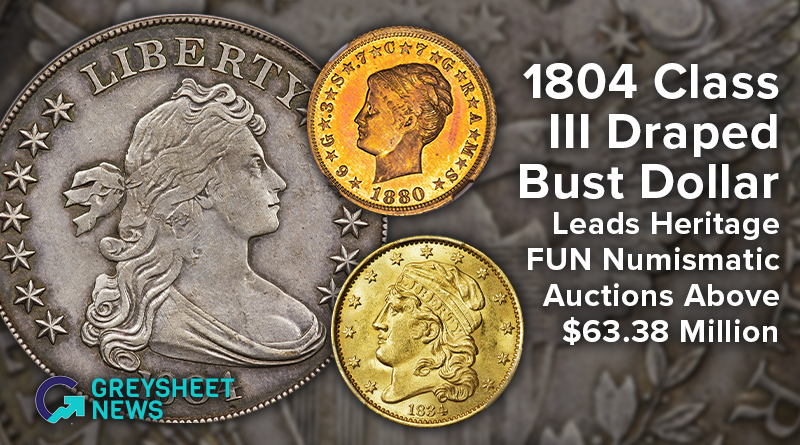
1879 Coiled Hair Stella, 1829 Capped Head Left Half Eagle and 1934 $10,000 federal reserve note also among event highlights.
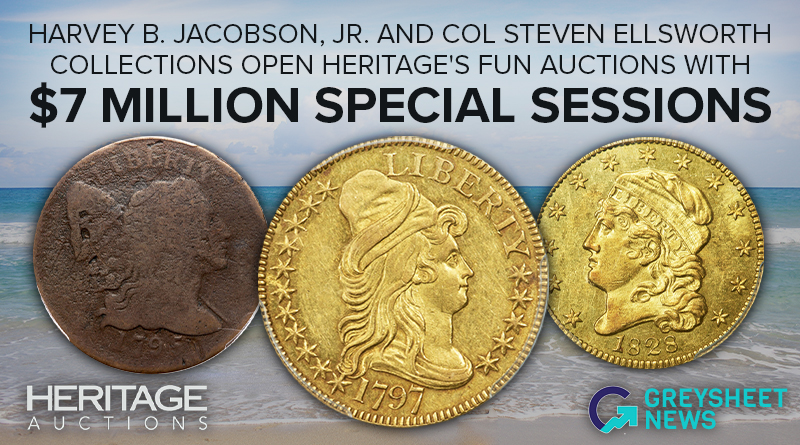
Unique 1797 BD-4 and 1834 BD-4 half eagles among event's top results.
Please sign in or register to leave a comment.
Your identity will be restricted to first name/last initial, or a user ID you create.
Comment
Comments