




 Whitman Expo
Belgium. Eagerly Anticipated Gold Bullion Investment Trade Coins Launched
The Royal Mint of Belgium release a new bullion range of ‘Belga’ gold coins.
by Michael Alexander |
Published on April 2, 2026

Download the Greysheet app for access to pricing, news, events and your subscriptions.
Subscribe to RQ Red Book Quarterly for the industry's most respected pricing and to read more articles just like this.
Advertisement
Named in honour of a currency introduced one hundred years ago, the Belga is remembered on its centenary anniversary with the introduction of a new range of gold bullion coins. The Belgian one-ounce and fractional gold coins now join the Austrian Philharmonic and Spanish wildlife series which are denominated in Euro.
First introduced in 1926 as part of the ‘Belga plan’ of then-Finance Minister Émile Francqui, and as part of a monetary reform to combat inflation after the First World War, the idea was to stabilise the Belgian franc by linking it to the gold standard. Calculated at a ratio of five Belgian francs to one belga, both banknotes and coins reflected these two currency systems simultaneously. Although the Belga itself was not intended to trade as a gold coin, its name symbolised the ambition to back the currency with gold reserves. The secondary currency was intended as a stable means of payment during a period of economic turmoil. The first cupro-nickel coins to reflect the belga and franc were minted and issued in 1930 during the reign of King Albert I – five francs, one belga – commemorative 10 francs, two belgas and in 1931 twenty francs, four belgas. Coins minted after 1933 no longer included the Belga denomination and the last banknotes to include reference to the belga were dated 1934. The secondary currency itself was formally dissolved in 1946, although the Belgian franc remained in use until the adoption of the Euro in 2002.
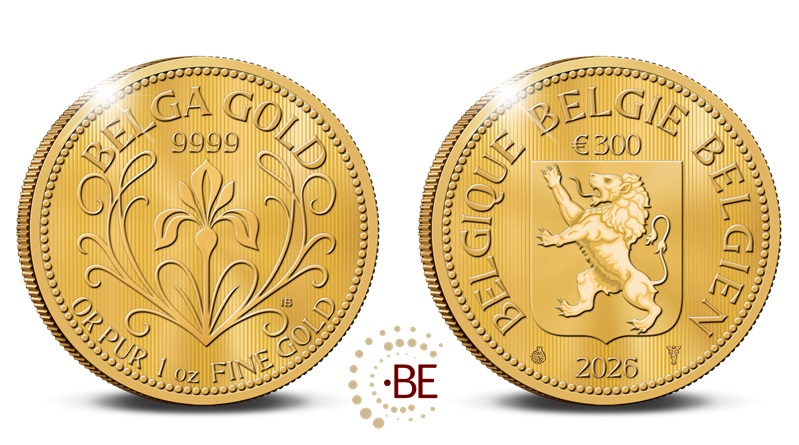
The Belga Gold bullion and investment coins are a tribute to the rich Belgian history and culture especially on the occasion of the centenary anniversary of the issue of the Belga. The bullion-quality coins are produced by the Royal Dutch Mint at their facilities in Houten, Netherlands under license of the Royal Belgian Mint. Designed by Iris Bruijns of the Royal Mint of Belgium, the obverse features a stylised iris, the flower is regarded as a symbol of the capital city of Brussels and is centred. Above the primary design and along the upper rim ids the text BELGA with the metal’s fineness of 9999 placed just underneath. Along the lower rim are the coins’ specifications OR PUR 1 oz FINE GOLD and OR PUR ¼ oz FINE GOLD. The reverse side depicts a modern and simplified version of the Belgian crest that includes a heraldic lion on a shield, centred. Above the crest is the denomination shown as €300 (one ounce) or €75 (quarter ounce). Surrounding the crest along the rim is the country name in the three national languages BELGIQUE BELGIË BELGIEN. Below the crest are the year of issue, 2026 and the mintmarks of the Royal Belgian Mint and Royal Dutch Mint, an Erlenmeyer flask with an aster (left) and the Mercury staff (right). Both obverse and reverse include a pattern of fine raised relief vertical lines in the field as both a means of security and design aesthetic purposes.
| Denomination | Metal | Weight | Diameter | Quality | Maximum Mintage |
| 75 Euro | .9999 Gold | 7.77 g. | 22 mm. | Bullion | To meet demand |
| 300 Euro | .9999 Gold | 31.1 g. | 38.6 mm. | Bullion | To meet demand |
Available from the 25th March, the coins can be purchased directly from the retail webshop of both the Royal Belgian Mint and the Royal Dutch Mint with spot gold pricing determining the cost of the coins calculated at the final point of sale.
Related Stories (powered by Greysheet News)
View all news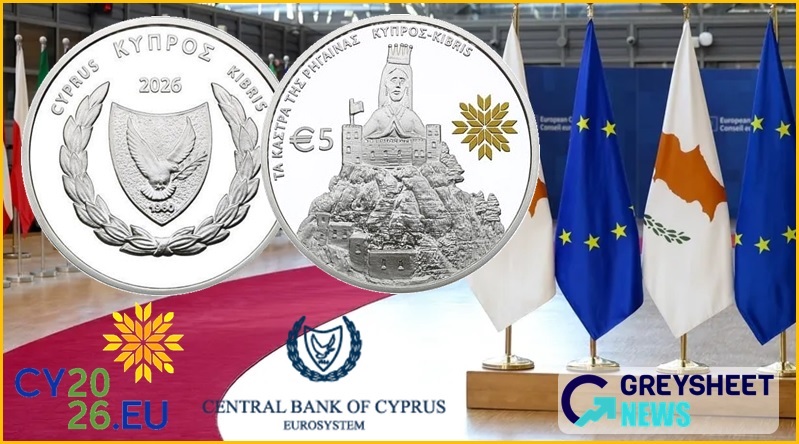
The Central Bank of Cyprus release new silver collector coins with an important EU-theme.

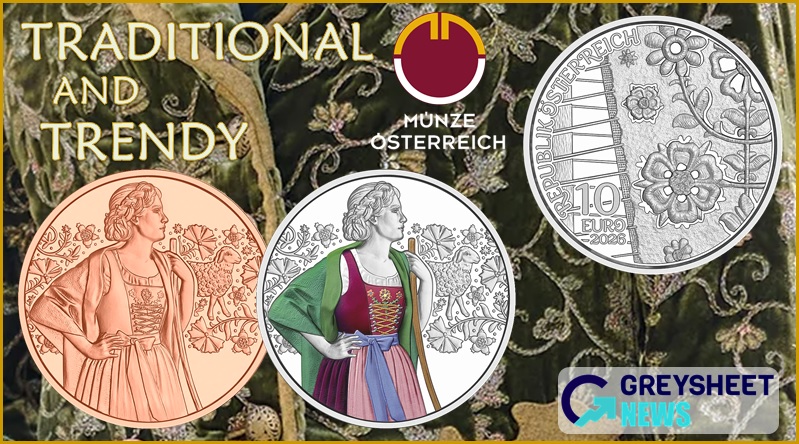
The Austrian Mint release the latest collector coins focusing on traditional Austrian attire.
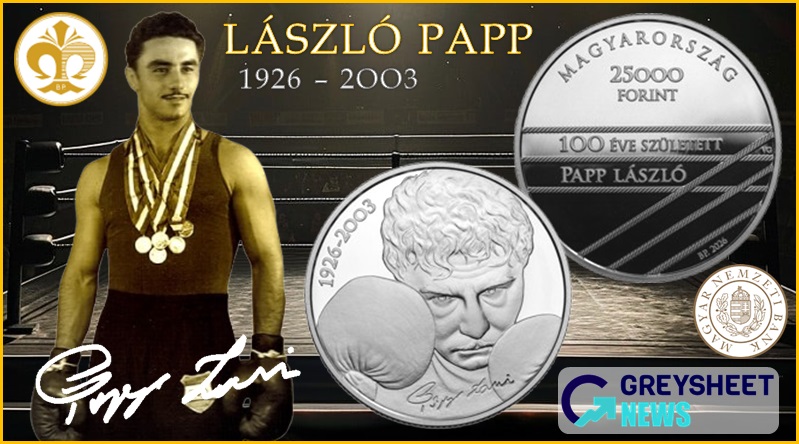
The National Bank of Hungary release coins marking the centenary anniversary of birth of a national hero.
Please sign in or register to leave a comment.
Your identity will be restricted to first name/last initial, or a user ID you create.
Comment
Comments