




 Whitman Expo
Australia. Limited Edition 25 Cent Collector Coins Mark 125th Anniversary of Federation
The Royal Australian Mint release new collector coins with a special denomination.
by Michael Alexander |
Published on March 5, 2026

Download the Greysheet app for access to pricing, news, events and your subscriptions.
Subscribe to RQ Red Book Quarterly for the industry's most respected pricing and to read more articles just like this.
Advertisement
This year, the 'land down under' marks 125 years of federation as the Commonwealth of Australia. The status as an independent country came into being on the 1st January 1901 and brought together the union of six previously self-governing colonies of New South Wales, Tasmania, Western Australia, South Australia, Victoria and Queensland.
The path to Federation had not been smooth as each of the six colonies were especially mindful to protect its own interests. However, after a series of conventions and referendums beginning in the 1890’s, the colonies all agreed to federate. Sir Edmund Barton (1849 – 1920) is considered the primary founder of the Commonwealth of Australia, who served as its first Prime Minister from 1901 to 1903. He was a leading Federation advocate, a key drafter of the Constitution, and led the first federal government, famously advocating for ‘a nation for a continent’. Federation was also possible due to the efforts of Sir Henry Parkes (1815 – 1896) a colonial Australian politician and the longest-serving non-consecutive premier of the Colony of New South Wales, present-day state of New South Wales. He was accorded the epithet 'Father of Federation' for his leadership in advancing the cause for nationhood during the last decade of his life.
Queen Victoria, who would now become Queen of Australia, signed the document that created the Commonwealth of Australia on the 9th July 1900. The document known as the Royal Commission of Assent to the Commonwealth of Australia Constitution Act 1900 was signed at Windsor Castle and also passed by the British Parliament. Further, on 17 September 1900, Queen Victoria issued a proclamation declaring the establishment of the Commonwealth of Australia, to take effect on the 1st January 1901, which is considered the official date of Australian federation and it is this anniversary which has been nationally celebrated ever since.
On January 1st 1901, crowds gathered in Sydney’s Centennial Park for the official inauguration of the new Commonwealth of Australia. The country’s first federal election was held on the 29th and 30th March 1901 to elect the First Prime Minister and the first Parliament was opened in Melbourne’s Exhibition Building on the 9th May 1901.
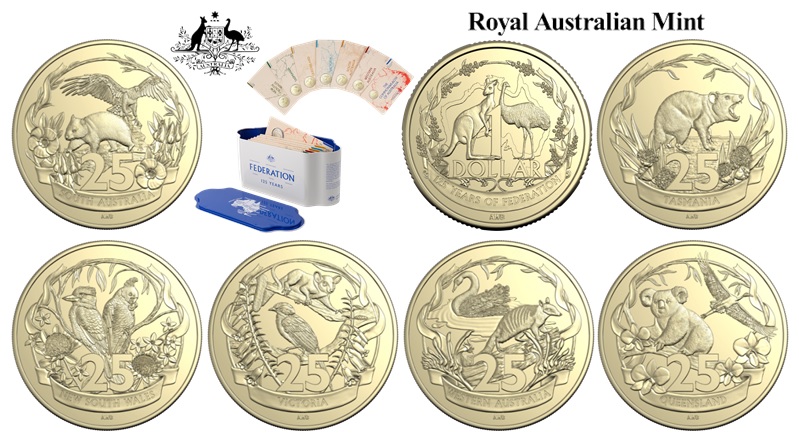
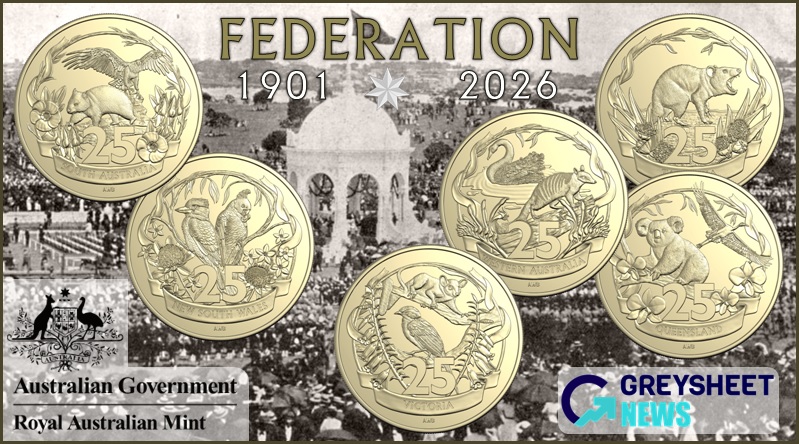
Designed by RAM artisan Adam Ball, each colony that became a state of Australia in 1901 is commemorated on the reverse side of new 25 cent denominated coins featuring the state’s distinctive faunal and floral emblems. The New South Wales and South Australia coins also include emblems of the Australian Capital Territory - ACT and Northern Territory - NT respectively. These territories, later formed in 1908 and 1911, were part of these states at the time of Federation. The seventh coin in the collection is a one-dollar coin representing the Commonwealth of Australia.
New South Wales – First established as a penal colony by the British in 1788, it was just over a century later when the colony’s Premier Henry Parkes announced all six colonies should become a federation as one country. The referendum was passed in 1899 and by the 1st January 2901, the Commonwealth of Australia became a reality. The Australian Capital Territory - ACT was established in 1908. The floral emblem depicted is the Waratah representing New South Wales and the Royal Bluebell represents the ACT. The bird emblem is the laughing kookaburra for New South Wales and the Gang-gang cockatoo represents the ACT.
Queensland – Originally named the Moreton Bay colony, it was established in 1824 and separated from the colony of New South Wales in 1859 and renamed Queensland. Known as the ‘Sunshine State’ it is a favourite holiday destination for Australians. The floral emblem depicted is the Cooktown Orchid, the land animal included is the koala, the bird emblem is the Brolga and the aquatic emblem shown is the Barrier Reef anemonefish.
South Australia – First established in 1836, this was the continents only colony designated a ‘free colony’ as it included no British convicts. South Australia’s first planned city, Adelaide was initiated in 1837 and named after Queen Adelaide, consort of King William IV. The colony was the first to grant women the right to vote in 1894. South Australia’s Northern Territory - NT separated in 1911 to become a federal territory within Australia. The floral emblem depicted is the Sturt’s Desert Pea representing South Australia and the Sturt’s Desert Rose represents the NT. The animal emblem is the Hairy-nosed wombat for South Australia and the Red kangaroo for NT. The bird emblem is Wedged-tailed eagle for NT.
Tasmania – The second colony in New South Wales was established was in 1803 on an island first known as Van Diemen’s Land, later Tasmania. It was formally declared a separate colony in 1825 and was home to one of Australia’s most notorious prisons in Port Arthur. Tasmania was also the home of Andrew Inglis Clarke, a lawmaker who is renowned in Australia as having drafted the constitution in the lead-up to eventual federation. The floral emblem depicted is the Tasmanian Blue gum and the animal emblem is the famed Tasmanian devil. The mineral depicted on the series is Crocoite, a rare, vibrant red-to-orange lead chromate mineral found in Tasmania.
Victoria – The settlement of Victoria separated from the colony of New South Wales in 1851 and established their capital city of Melbourne, which became one of the wealthiest cities in the world following the gold rush in the 1880’s. Australia’s first federal Parliament met for the first time in the city of Melbourne in May 1901 until it was permanently moved to Canberra in 1927. The floral emblem depicted is the Common Pink heath and the animal emblem is the Leadbeater’s Possum. The bird emblem is the helmeted honeyeater and the mineral depicted is gold, in tribute to the gold rush in the colony’s earlier history.
Western Australia – Originally known as the Swan River Colony – present-day Perth was first established in 1829 and as the primary settlement in Western Australia. While initially reluctant to become part of the proposed federation, the 1900 referendum passed and Western Australia became the largest state in terms of size in the Commonwealth. The trans-continental railway linking Western Australia with the eastern coast opened in 1917 and covers approximately 4352 kilometres or, 2704 miles. The floral emblem depicted is the Red and Green kangaroo paw and the animal emblem is the numbat. The bird emblem is the Black swan and the marine emblem is the white shark.
Australia, $1 – The path to eventual federation into one nation was achieved through a series of conventions and referendums which occurred during the 1890’s. Ultimately, the final referendum in 1900 led the British Parliament to pass the Commonwealth of Australia Constitution Act 1900. The act received royal ascent from Queen Victoria and became law on the 1st January 1901, but Australia’s first series of national coinage would not be released until 1910, nine years after federation. Featured is a Kangaroo on the left and an Emu on the right, as seen on the country’s official crest. Behind the two animals is an outline of the Australian continent. The floral emblem featured is the Golden wattle, the national gemstone is the Opal and the national colours are Green and Gold.
| Denomination | Metal | Weight | Diameter | Quality | Mintage Limit |
| 25 Cents X 6 | Al Zn Br | 12 g. | 32.6 mm. | BU | 12,500 each |
| 1 Dollar | Al Br | 9 g. | 25 mm. | BU | 12,500 |
Available from the 1st March, the BU coins are presented in a capsule and affixed onto a coin-card format that includes specifications and information about the coin’s design as well as the state it represents. The coins are also available as a seven-coin set which is housed in a tin case designed to hold all holders. For additional information, please visit the e-webshop of the Royal Australian Mint.
Related Stories (powered by Greysheet News)
View all news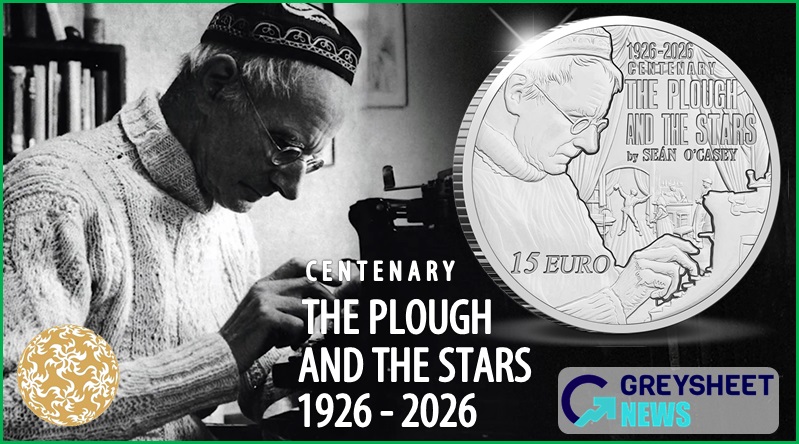
The Central Bank of Ireland release new silver proof coins marking an important literary anniversary.

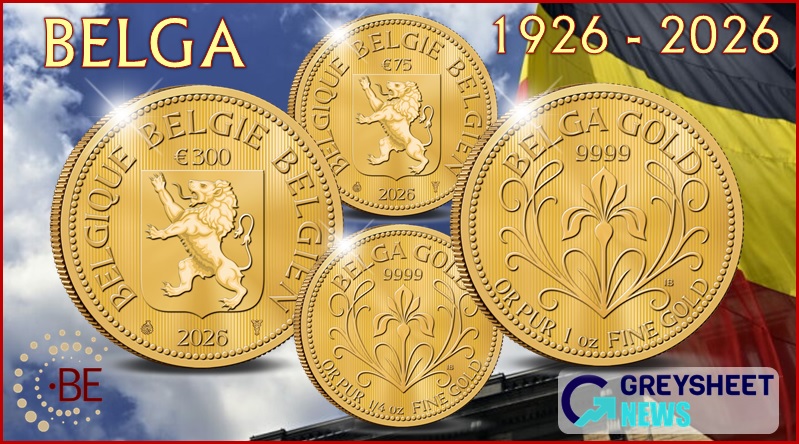
The Royal Mint of Belgium release a new bullion range of 'Belga' gold coins.
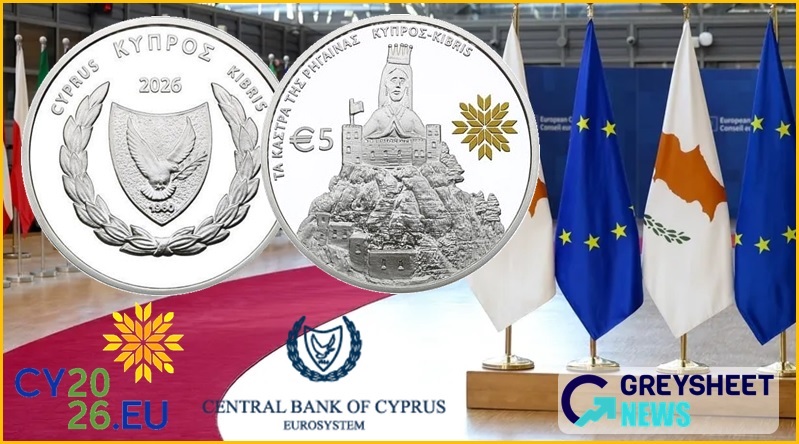
The Central Bank of Cyprus release new silver collector coins with an important EU-theme.
Please sign in or register to leave a comment.
Your identity will be restricted to first name/last initial, or a user ID you create.
Comment
Comments