

- U.S. Coins /
- Proof & Mint Sets /
- Proof Sets (1936–) /
- 1960 1c-50c Proof Set, Large Date Lincoln Cent, 5 Coins PR
1960 1c-50c Proof Set, Large Date Lincoln Cent, 5 Coins PR

1960 Proof Set
Source: Whitman Publishing
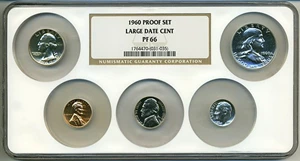
1960 Large Date Proof Set 1c -- 50c Multi-Coin Holder NGC Proof 66
Source: David Lawrence Rare Coins
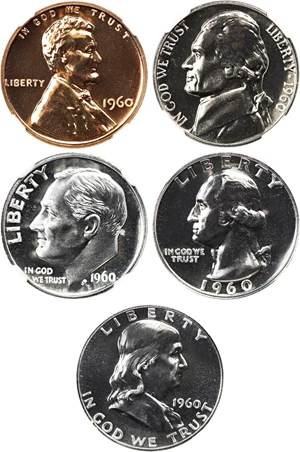
1960 Large Date Proof Set NGC Proof 67 (5 coins)
Source: David Lawrence Rare Coins
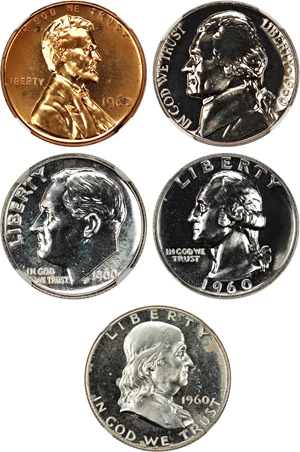
1960 Proof Set NGC Proof 64-67
Source: David Lawrence Rare Coins
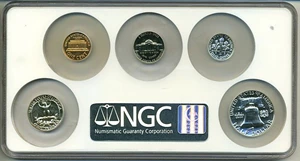
1960 Large Date Proof Set 1c -- 50c Multi-Coin Holder NGC Proof 66
Source: David Lawrence Rare Coins
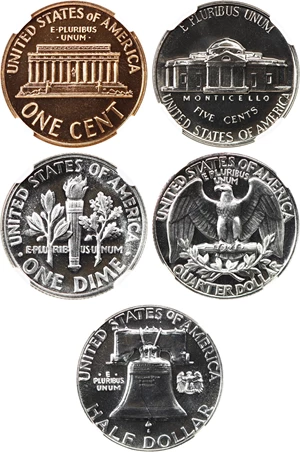
1960 Large Date Proof Set NGC Proof 67 (5 coins)
Source: David Lawrence Rare Coins
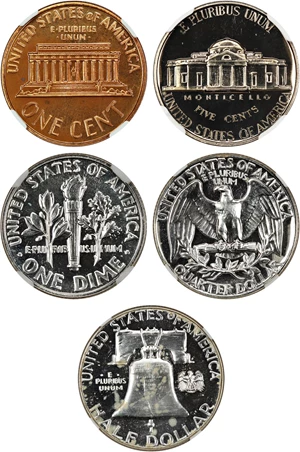
1960 Proof Set NGC Proof 64-67
Source: David Lawrence Rare Coins
1960 Large Date Proof Set 1c -- 50c Multi-Coin Holder NGC Proof 66
Source: David Lawrence Rare Coins
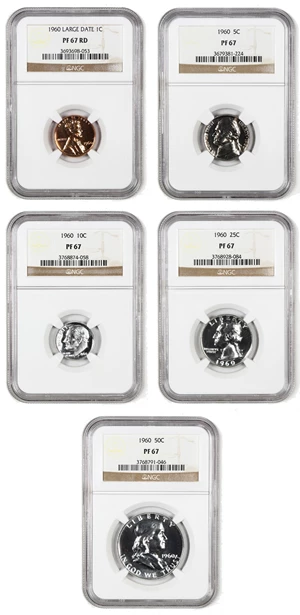
1960 Large Date Proof Set NGC Proof 67 (5 coins)
Source: David Lawrence Rare Coins
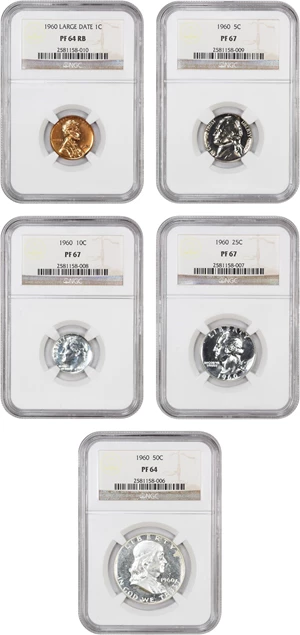
1960 Proof Set NGC Proof 64-67
Source: David Lawrence Rare Coins
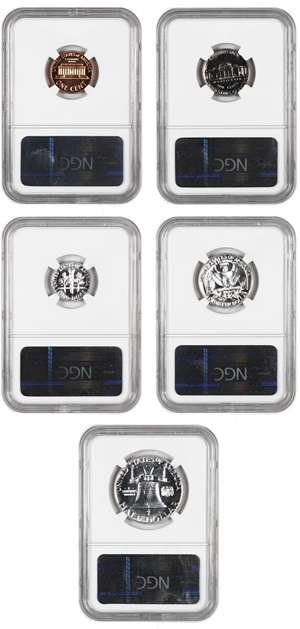
1960 Large Date Proof Set NGC Proof 67 (5 coins)
Source: David Lawrence Rare Coins
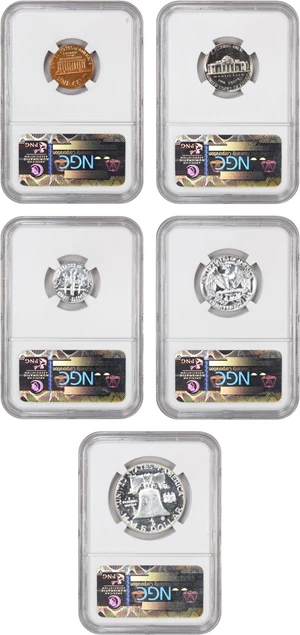
1960 Proof Set NGC Proof 64-67
Source: David Lawrence Rare Coins

1960 Proof Set
Source: Whitman Publishing

1960 Proof Set 1c-50c NGC Proof 68 (5 Coins)
Source: David Lawrence Rare Coins

1960 Proof Set 1c-50c NGC Proof 68 (5 Coins)
Source: David Lawrence Rare Coins

1960 Proof Set 1c-50c NGC Proof 68 (5 Coins)
Source: David Lawrence Rare Coins

1960 Proof Set 1c-50c NGC Proof 68 (5 Coins)
Source: David Lawrence Rare Coins

1960 Proof Set 1c-50c NGC Proof 68 (5 Coins)
Source: David Lawrence Rare Coins

1960 Proof Set 1c-50c NGC Proof 68 (5 Coins)
Source: David Lawrence Rare Coins

1960 Proof Set 1c-50c NGC Proof 68 (5 Coins)
Source: David Lawrence Rare Coins
Greysheet Catalog Details (GSID: 10970) Original Packaging: The five coins were sealed into a single pliofilm envelope with pockets for each coin, a sixth pocket containing an embossed and printed paper seal reading US MINT PHILADELPHIA in blue on a silver background. The set was protected from damage by two strips of cardstock, and all three pieces were inserted, along with a brief fact sheet, into a buff-colored mailing envelope. This carried a pre-printed return address and a discreet notation of its contents. Commentary: Proof set sales in 1960 showed healthy, though unspectacular, growth over those of 1959. Midway through the year, however, most collectors were wishing that they had ordered more sets, when the discovery of the Small Date cents set the hobby afire. Though many veteran numismatists and the Mint itself tried to deny that there was a difference between the Small Date and Large Date cents, sharp-eyed collectors knew better. These varieties are indeed the result of the Mint’s using two different obverse master dies in 1960. The Small Date cents came first. Their production was discontinued as early as February of that year, when it was discovered that the small size of the numeral 0 in the date subjected it to chipping and filling of the die. A new master die was quickly introduced in which the numerals 960 were all enlarged to reduce die failure. Both Proofs and circulation pieces were produced of both varieties, but the Small Date coins of both issues were much scarcer. A great speculation arose in 1960 Small Date cents, which spurred what became the great coin investment boom that lasted until 1964. This date is rich in doubled-die varieties, including cents in which the Small Date and Large Date overlap one another in various combinations, such as Small over Large Date and vice versa. Amazingly, both such combinations are known in Proof! Though not great rarities, these varieties are extremely desirable and carry substantial premiums. 1960 proved to be a troublesome year for die-making at the Mint, as doubled dies are known in Proof for all five denominations. A quadrupled-die reverse is known for the nickel, along with several lesser doubled dies. The Proof dimes may be found with die doubling on either obverse or reverse, both of these being visible to the naked eye. Though not as dramatic, a popular doubled-die reverse is known for Proof 1960 quarters, along with a number of lesser doubling varieties. Finally, a very obvious doubled-die obverse may be found on 1960 Proof half dollars. Given the fact that many Proof sets of this year are still in the hands of persons who don’t know of these varieties, the chance for scoring a winning variety at the price of a regular set remains a tantalizing prospect for the knowledgeable shopper. Best of all is to find these varieties on coins having cameo frosting. This is not impossible, since the overall quality of Proof sets improved markedly beginning in 1960. The Mint was less likely to overuse and overpolish the dies, so it is evident that the dies were being replaced more frequently (perhaps this also accounts for the greater number of varieties). Ultra or deep cameo Proofs are still rare, but they become more readily available beginning with 1960. As further evidence that the Mint was becoming conscious of the quality of its coins, several minor improvements were made to the dies themselves. The nickel, quarter, and half dollar all received slight facelifts, as the Proofs of these denominations showed obviously greater sharpness than even the best struck 1959 coins. The Roosevelt dime had not suffered any visible erosion of its master hubs since being introduced in 1946, so no changes were needed for it. Sadly, however, the obverse of the cent continued to deteriorate, and its faults were not addressed until 1969.
 Dealers Only
Catalog Detail
Visit these great CDN Sponsors
CDN Sponsors





Greysheet & CPG® PRICE GUIDE
From the Greysheet Marketplace

Buy Now: $300.63

Buy Now: $462.50

Buy Now: $346.88

Buy Now: $393.13

Buy Now: $21,737.50
Buy Now: $300.63
Buy Now: $462.50
Buy Now: $346.88
Buy Now: $393.13
Buy Now: $21,737.50
Related Stories (powered by Greysheet News)
View all news

About CDN Prices
All CDN prices are based on proprietary market knowledge and technology developed by CDN Publishing, LLC.
CPG® prices represent retail levels. Collectors should refer to CPG values as a starting place for their negotiations, or auction bid reference.
Greysheet/Greensheet prices are wholesale market levels for collectible coins/paper money intended to indicate what a dealer, or wholesale, buyer would pay for the described item in the specified grade. Greysheet/Greensheet represent "sight-seen" values based on a buyer's in-hand review. The actual value can be more or less than this depending on factors including eye appeal and market timing.
Bluesheet (NGC & PCGS) prices represent the highest sight-unseen offers to buy on dealer networks like CDN Exchange. In many cases, there are no active sight-unseen buy offers, so CDN looks to the recent lowest market values for such an item. For this reason, Bluesheet values typically represent the floor of the market for the specified item. CDN only tracks Bluesheet on certain items.
CAC prices are for U.S. coins that meet the standards of the Certified Acceptance Corporation. You can learn more about CAC on their web site.
Price movement is indicated for price changes in the last 30 days.
The prices listed in our database are intended to be used as an indication only. Users are strongly encouraged to seek multiple sources of pricing before making a final determination of value. CDN Publishing is not responsible for typographical or database-related errors. Your use of this site indicates full acceptance of these terms.