




 Whitman Expo
Portugal. The Centuries-Old Art of Azulejo Features on New Five-Coin Proof and Colour Set
The Imprensa Nacional Casa da Moeda – INCM release innovative silver coins highlighting a national craft.
by Michael Alexander |
Published on December 30, 2025

Download the Greysheet app for access to pricing, news, events and your subscriptions.
Subscribe to RQ Red Book Quarterly for the industry's most respected pricing and to read more articles just like this.
Advertisement
The collection pays homage to the history to a distinct style of Portuguese tile work from the 15th to the 20th centuries. Each piece represents a distinct era, with colourful ceramic elements, highlighting the durability and beauty of this art so characteristic of Portuguese identity. The art and functionality of Azulejos constitute a major aspect of Portuguese and Spanish architecture to this day, and are found on buildings across Portugal, Spain and their former territories. Many azulejos designs chronicle major historical eras and cultural aspects of Portuguese and Spanish history. Today, the word azulejo in Spanish and Portuguese is simply a reference for everyday tiles.
The name azulejo may be a reference to the Arabic word azzelij meaning a small smooth stone which was used in reference to Byzantine mosaics found in the Middle East. An equally popular theory is that the name azulejo is derived from the Spanish and Portuguese word azul meaning the color blue, which in turn comes from the Persian word lazhward – a reference for the mineral lapis lazuli. As a large part of the azulejos produced in Portugal were predominantly blue, and this is most likely where this theory originates.
The style of Azulejos has evolved over the centuries, the art of Byzantine mosaic technique of producing tiles and scenic images spread widely in North Africa and the Mediterranean countries of Europe, and especially the Iberian Peninsula, which was under Moorish rule until the 14th century. The Spanish city of Seville became the major centre of the Hispano-Moresque tile industry and the earliest azulejos in the 13th century were panels of tile-mosaics known as alicatados.
The five-coin square-shaped series focuses on the predominant styles and techniques prevalent during the era’s features and beginning with the 16th century and through to the 20th century. Designed by the artist Eduardo Aires, the obverse side of each coin features colourful ceramic inlays, reminiscent of the glazed brilliance of Portuguese azulejo and are arranged a 12 x 12 divided grid. Each coin includes the text PORTUGAL found on the third line with each letter placed in one square. The year of issue, 2025 is shown in a vertical direction in the third column to the left. The denomination 5 EURO is seen on the found on the tenth line with each letter placed in one square. The crest of Portugal is shown near the right half comprised of four tile sections and placed near the centre right. Each obverse design includes from two to four different colour tiles arranged in different patterns. The reverse side design common to all five eras includes the text AZULEJOS placed along the top line with each letter placed in one square. The additional text SÉC an abbreviation for century is placed at the bottom line with each letter placed in a square after the represented era shown in Roman numerals. Near the top left in a vertical direction along outside edge of the small tiles is the text CASA DA MOEDA EDUARDO AIRES.
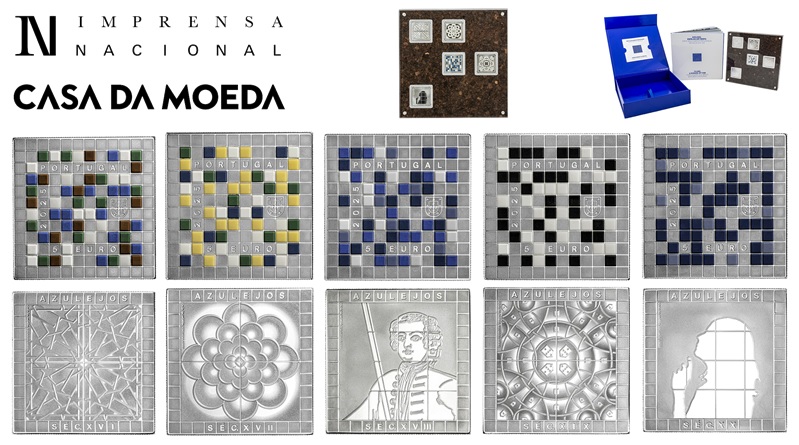
XVI Century - Spanish-Moorish. Geometric heritage and Islamic aesthetics meet the origins of Portuguese production. The predominant designs featured stars, interwoven motifs, and muted colours in repetitive patterns which predominated the first primary inspiration for Portuguese azulejo art.
XVII Century - Patterned Design. An age of patterned colours and ornamental designs characteristic of a tapestry-effect begins to appear. Also predominant in designs are intense blues, vibrant yellows, and motifs such as camellia and diamond cut, symbols of Baroque churches and palaces.
XVIII Century - Figurative Design. From the 18th century onward, azulejo design becomes more narrative with inviting figures focusing on religious, mythological and genre scenes which dominate the large panels of the Johannine and (Marquis de) Pombalian period. The colour blue attains an iconic status with azulejo design that endures to this day.
XIX Century - Revival. Designs during the 19th century reflected a preference for Estilo Manuelino, a lavish, uniquely Portuguese architectural and decorative style from the early 16th century named for King Manuel I, a revival of Moorish style and traditional coats of arms redefined facade decoration. Brazilian influences, the development of new manufacturing and industrial methods ushered in a century of light, colour, and urban expansion.
XX Century - The contemporary art. Azulejo design becomes incredibly varied from with styles emanating from Art Nouveau, Modernism and regional influences. Well-known Azulejo artists such as Jorge Colaço, Maria Keil , Querubima Lapa and Lourdes Castro, the centuries-old style becomes a vehicle for contemporary artistic expression that is transformed into public art.
| Denomination | Metal | Weight | Dimensions | Quality | Mintage Limit |
| 5 Euro X 5 | .999 Silver | 24 g. | 30 / 30 mm. | Proof & Colour | 3000 Sets |
Available from the 17th December, each of the five coins in the set is encapsulated and presented in a dark natural Portuguese cork easel mat which is pressed and affixed between Lucite sheets. The frame is presented in an outer card case and accompanied with a booklet describing each coin and era it represents. For additional information, please visit the e-webshop of the Imprensa Nacional Casa da Moeda.
Related Stories (powered by Greysheet News)
View all news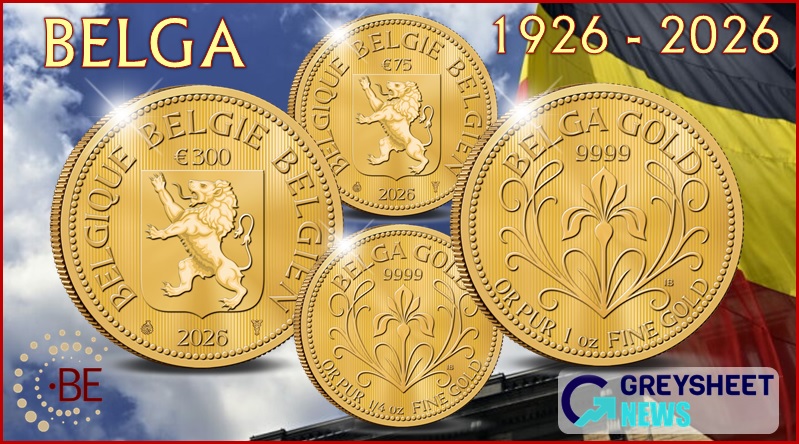
The Royal Mint of Belgium release a new bullion range of 'Belga' gold coins.

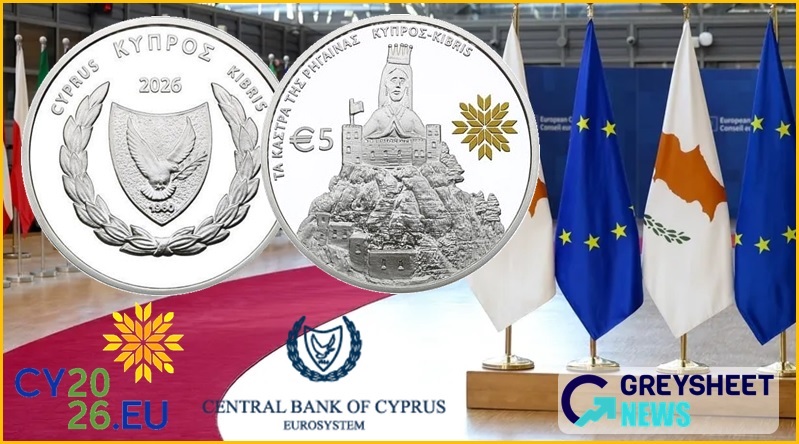
The Central Bank of Cyprus release new silver collector coins with an important EU-theme.
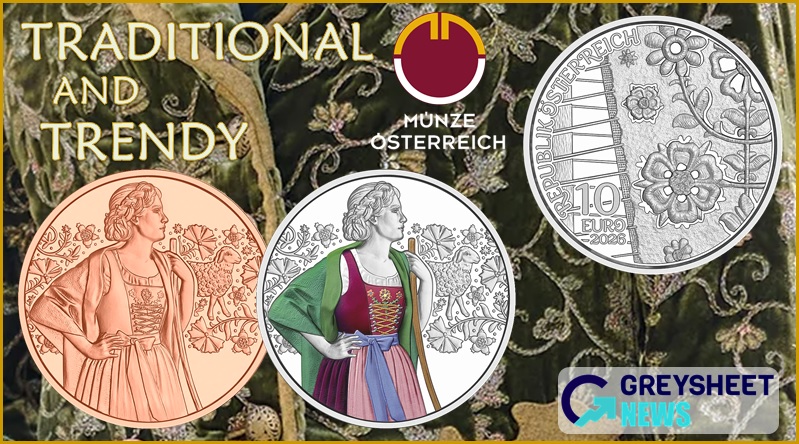
The Austrian Mint release the latest collector coins focusing on traditional Austrian attire.
Please sign in or register to leave a comment.
Your identity will be restricted to first name/last initial, or a user ID you create.
Comment
Comments