




 Whitman Expo
America's First Quarter Dollar
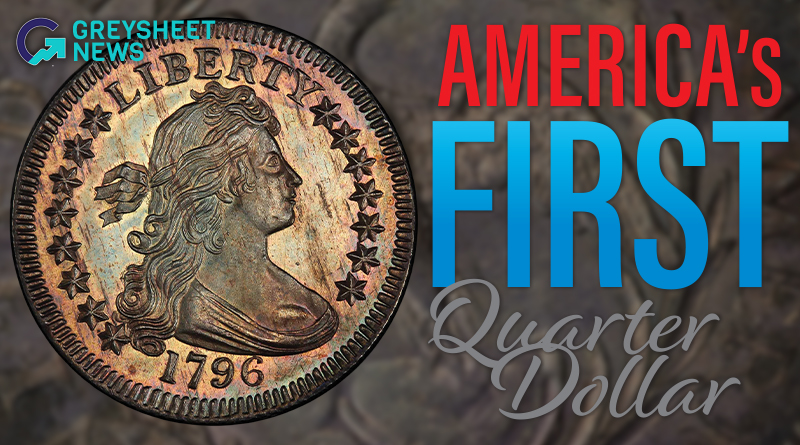
The 1796 Draped Bust quarter dollar is a very important first-year of issue, one-year type coin and the only American quarter struck during the 18th century.
by Michael Garofalo |
Published on March 2, 2026

Download the Greysheet app for access to pricing, news, events and your subscriptions.
Subscribe to The Greysheet for the industry's most respected pricing and to read more articles just like this.
Advertisement
The Coinage Act of 1792 was passed by Congress on April 2, 1792, and signed into law by President George Washington. Copper coinage—half cents and large cents—were the primary economic considerations and were first struck the following year, 1793. These copper coins met the need for small denomination coinage.
For larger denomination transactions, foreign silver and gold coins were in circulation and widely accepted everywhere. But as these coins were different weights, sizes, and denominations, completing transactions was often difficult. The Coinage Act of 1792 established that a United States Mint was to be built, the key positions that needed to be filled to run the Mint efficiently, and the denominations that were required to be struck. One of those denominations was the quarter dollar, which would be equal to 25 cents. The engraver, Joseph Wright, is the person believed to have designed a pattern coin that depicts a young-looking allegorical representation of Miss Liberty, facing to the right in fine details. This pattern coin has "LIBERTY", on the upper periphery and the date, "1792", on the lower periphery.
The reverse depicted an American eagle, body facing to the right, head facing to the left, standing on half of a globe with "UNITED STATES OF AMERICA", around the periphery. There are 4 known examples of the white metal version and two of them are in museum collections. A specimen graded AU58 by the Numismatic Guaranty Corporation (NGC) sold for $1,260,000 at Heritage Auctions in April of 2021.
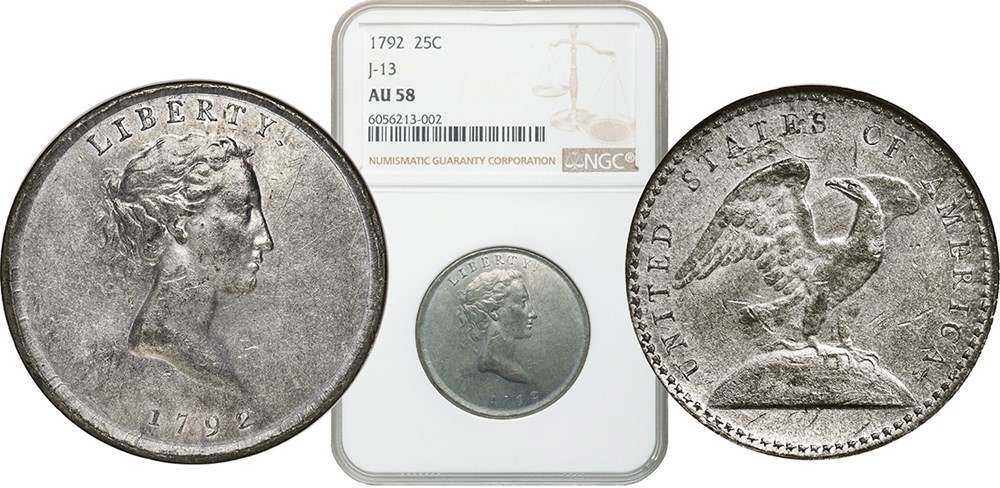
Additionally, there are two known examples struck in copper and while one is held in a museum, the other example is graded MS63 Brown by NGC. It also sold in a Heritage auction in January of 2015 for $2,232,500.
Half dimes, half dollars, and dollar denominations were struck in 1794, which now gave the fledgling U.S. Mint five different denominations to strike. The two remaining denominations, dimes and quarters, were struck beginning in 1796. The quarter dollar coin was one of the least needed coins at the time as the United States had an overabundance of Spanish two reales coins in circulation. These Spanish coins traded at roughly the same value in commerce as the new quarter. These coins were considered equal in trade because, for example, the 1796 Spanish two reales was struck at a weight of 6.77 grams of .8330 fine silver and the newly designed 1796 American quarter contained 6.74 grams of .8924 fine silver.
Due to numerous early complaints about the unusually wild-looking design of Miss Liberty on the circulating copper coins, the Director of the United States Mint, Henry DeSaussure, hired the celebrated portrait artist, Gilbert Stuart, to create a more life-like looking Miss Liberty. The prominent Philadelphia socialite, Mrs. William Bingham, posed for his design. While Stuart’s portrait was fairly attractive, it did not transfer well to the coins that were created based on his work. Stuart was disappointed in how his sketches were adapted and engraved by Chief Engraver Robert Scot. Stuart never approved of the Mint’s adaptation of his new design. In fact, he never promoted this work, and it wasn’t until 1887 when an article was published in the American Journal of Numismatics that the fact of Stuart’s involvement became public.
The new Miss Liberty had a softer and more human appearance as she faced to the right. Her long, flowing hair was tied back with a ribbon as she gazed into the distance. Above her, on the upper periphery was the word, "LIBERTY", which was separated by the which gave the coin an overall neat and finished appearance.
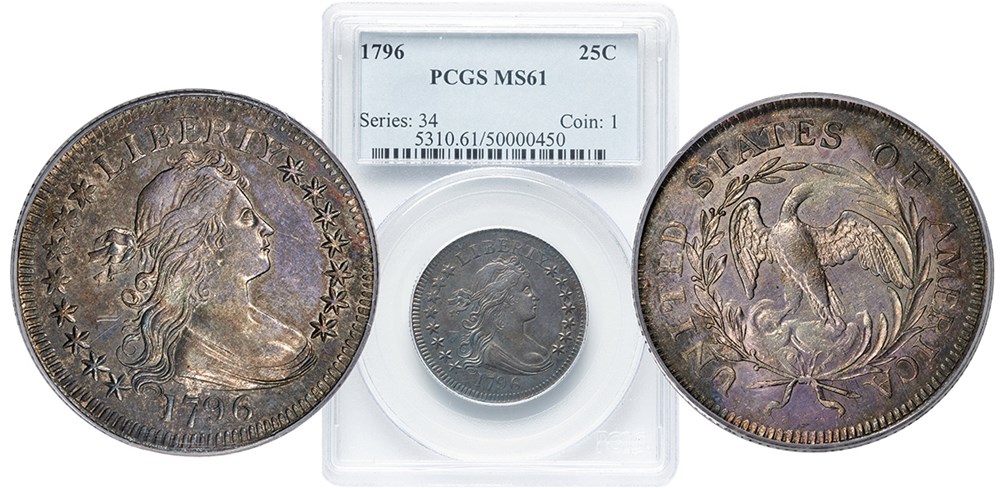
While most coins of this era display only 13 stars, this coin displays 15 stars representing the number of actual states admitted to the Union at that time. But the Mint soon realized that as more states joined the union, the stars would soon dominate the design. The Mint made the decision to limit the numbers of stars to 13, represented on any future coins, honoring the original Colonies and all subsequent states.
The reverse design was borrowed from the 1794 silver dollar which depicted a small-sized eagle standing upon a bank of clouds. The eagle is displayed within a large wreath of laurel and lily and tied with ribbons. Around the periphery was "UNITED STATES OF AMERICA", but it depicted no denomination. The 1796 quarter was the only American quarter struck for use in the 18th Century.
The Mint at Philadelphia struck 5,894 of these 1796-dated quarters in 1796, while 252 additional coins were not delivered until February of 1797, for a total of 6,146 pieces.
The Mint used two distinct obverse dies and one reverse die to strike these coins. The differences are somewhat minor in appearance and they are determined by the positioning of the "6" in the date and the fifteenth star which was the final star on the left. The first variety is classified B-1 ("B" for Ard W. Browning, the author of the definitive work on Draped Bust Quarters) and it has a low "6", while the second variety is B-2, which has a higher "6", and is about three times more common than the B-1 variety. But even though these varieties are distinct, very few collectors try to have one of each design, due to the scarcity of any 1796 quarters.
It is believed that roughly 700 of these 1796 quarters might actually survive today. We estimate that between the three major coin grading services, the Certified Acceptance Corporation (CACG), the Numismatic Guaranty Corporation (NGC), and the Professional Coin Grading Service (PCGS), approximately 720 coins have been certified and this could likely represent as many as 550 different coins. The difference in the number of coin submissions and actual coins can be attributed to coins being submitted for grading more than once. The likely average grade is Very Fine-30 or better. However, there are seemingly more than 100 examples of this rare date that survived in Mint State condition.
This is such a scarce coin that it is highly desirable in all grades. There is tremendous pressure from collectors, dealers, and investors to acquire an example of this coin in any grade. It is an important acquisition for Draped Bust coin collectors, early quarter collectors, and especially type coin collectors as this coin is truly a one-year type coin. Well-worn coins, holed, damaged, cleaned, or otherwise impaired specimens still bring a few thousand dollars in auction, while very high end examples routinely bring hundreds of thousands of dollars.
When you are examining a 1796 quarter, you should look at the obverse of the coin first. If there is any wear on the coin, it will first present itself on the highest points of the hair above the forehead. Next look at the shoulder and bust line for wear. On the reverse of this coin, look at the eagle’s breast and the top edges of the wings. It is very likely that the eagle’s head will be flatly struck. This is caused by the eagle’s head being directly opposite to Miss Liberty’s shoulder on the obverse of the coin.
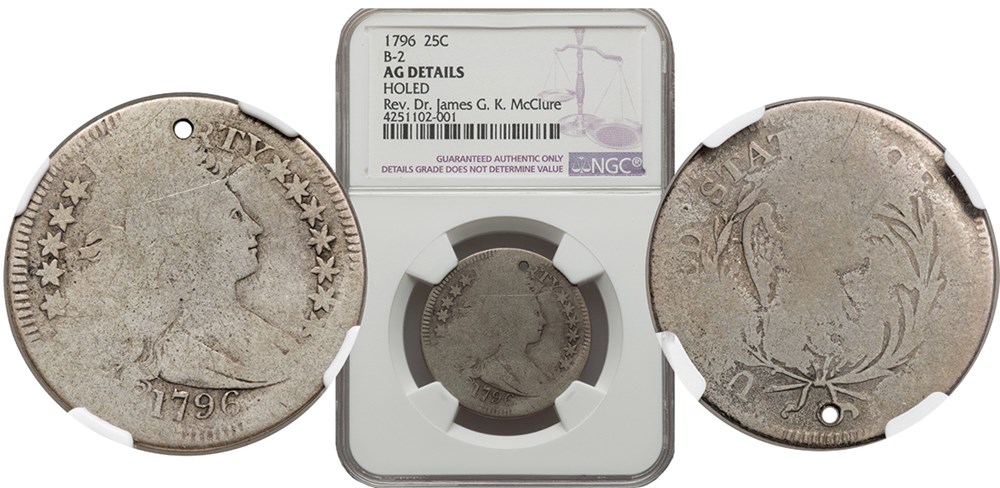
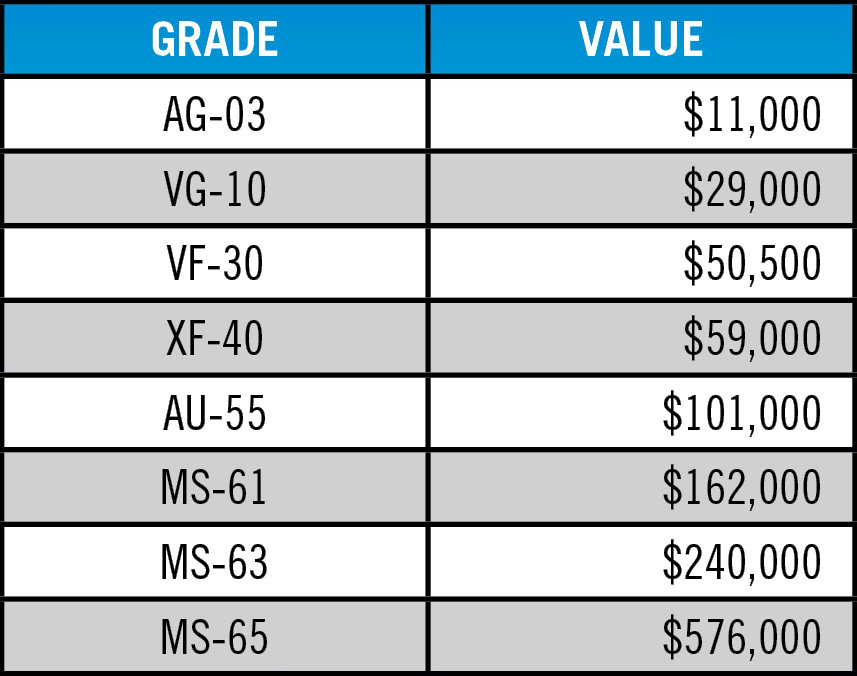
To provide some context and a range of pricing for this rare coin in differing grades, a coin graded as About Good-3 by NGC, which was also holed, brought $3,055 at a Heritage Auction in 2016.
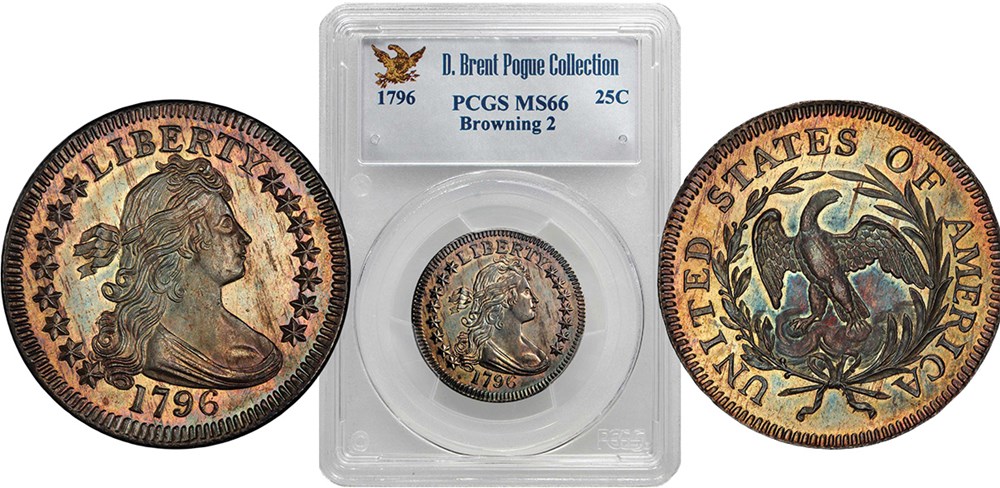
At Stack’s Bowers Galleries, a 1796 Draped Bust Quarter Dollar, B-2, certified MS66 by PCGS, was an important coin in the Pogue Collection. This coin has spectacular, original color on both sides giving it outstanding eye-appeal. In 2015 it sold for $1,527,500.
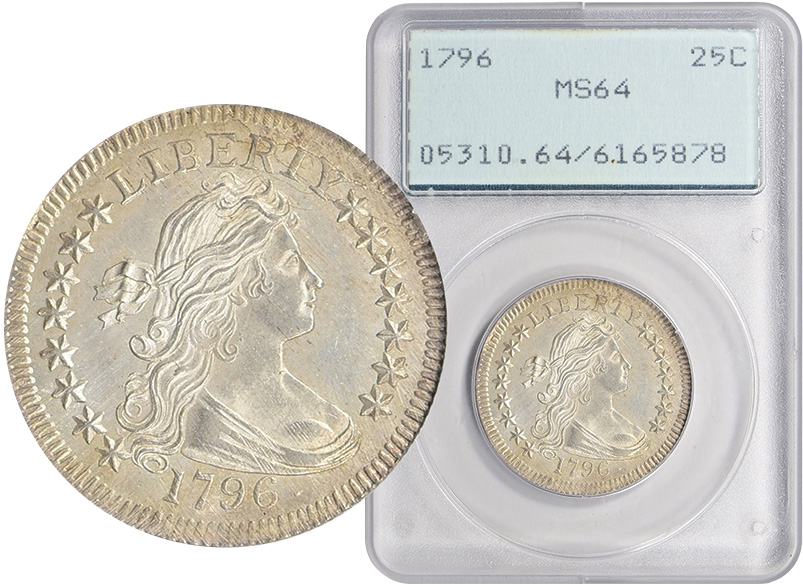
GreatCollections sold a beautiful MS64 PCGS-graded coin, housed in a First Generation "Rattler Holder", back in 2020. This coin brought $303,750 after very spirited bidding and amassed a total of 77 bids! There were lots of collectors, dealers and investors who wanted to own this coin.
The 1796 Draped Bust quarter dollar is a very important first-year of issue, one-year type coin and the only American quarter struck during the 18th century. Its appearance in any coin auction guarantees a great deal of interest and excitement. It is an important and historic coin, and many people reading this will never have the privilege of owning any example of this rare coin, although it is a worthy goal to have!
Images courtesy of Heritage Auctions, Stack's Bowers Galleries and GreatCollections.

Related Stories (powered by Greysheet News)
View all news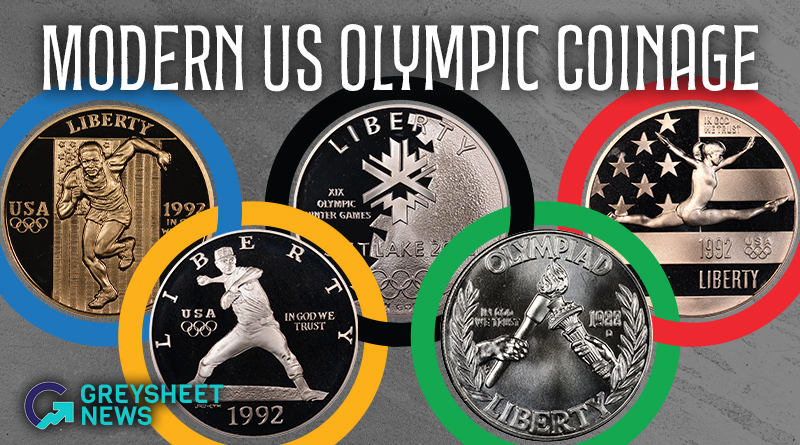
The Olympics as we know them began in 1896, but it took until 1952 for the first modern Olympic coin to be struck.

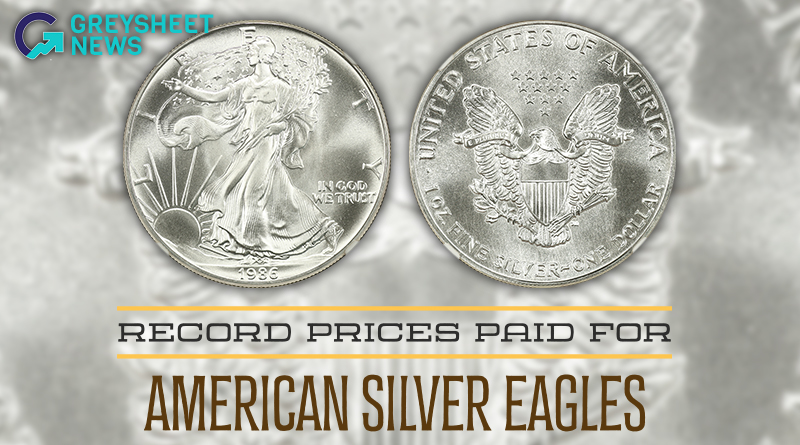
These coins typically have mintages in the tens of millions, but not all of these coins are common or sell for modest premiums.
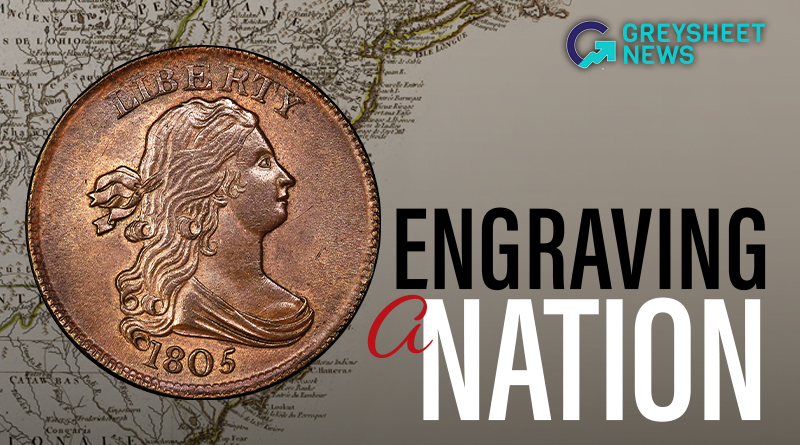
Draped Bust Half Cents are a great series to collect as there are only eight different dates and the common varieties are very affordable.
Please sign in or register to leave a comment.
Your identity will be restricted to first name/last initial, or a user ID you create.
Comment
Comments